ServicesTPO Roofing
TPO Roofing in Lawrence, IN
Low-slope roofs over porches, garages, sunrooms and rear additions need a different material than the shingles on the rest of your home. We install TPO membrane with hot-air welded seams and careful drainage, so water leaves the roof instead of sitting on it.
When TPO is the right roof
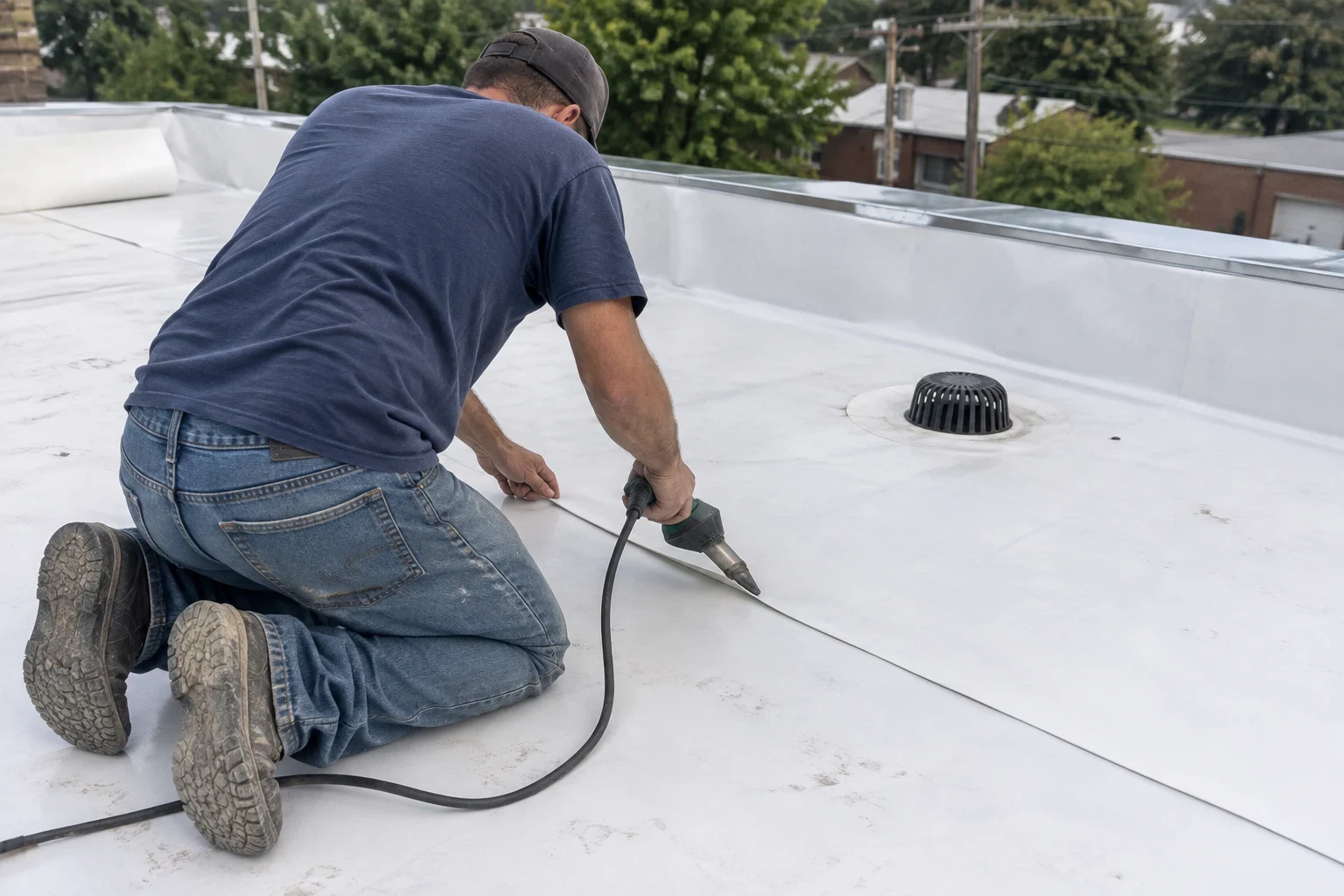
TPO is a single-ply membrane made for roofs with little or no pitch. Shingles rely on gravity to shed water, so on a pitch too shallow for them they start leaking at the laps. TPO goes down as one continuous sheet, and the seams are joined with hot air until the two layers fuse into a single piece.
Many homes carry a low-slope section somewhere: a flat-roofed addition, a carport tied into the main roof, a porch built long after the house. Those sections were often covered in rolled roofing or tar and gravel, and they tend to fail years before the shingles beside them. Indiana winters are hard on them, because water that sits in a shallow dip freezes, expands and works into every seam.
We look at the whole roof before recommending TPO. If a section has enough pitch for shingles or metal, we will say so. When TPO is the answer, we build it to drain, tie it properly into the walls and the shingled roof, and finish the edges so it looks like it belongs on your home.
What goes into a TPO roof from us
Full removal of the old roof
Old roll roofing, tar and gravel or a worn-out membrane all come off until we reach bare decking. Laying new material over an old roof seals in moisture and hides weak spots, and we want a clear look at the wood first.
Decking repairs
Any sheathing that has rotted or come apart is cut away and replaced. You'll see photos of the damage before we fix it.
Insulation and built-in slope
We fasten rigid insulation board over the deck. On roofs with low spots that collect water, tapered board creates a gentle pitch toward the edge, scupper or drain.
Membrane and hot-air seams
The TPO sheet is laid out and either fastened or adhered, depending on the roof. Every seam is fused with a hot-air welder, then checked with a probe once it cools, since a weld can look sound from above and still hide a gap.
Flashing at walls and transitions
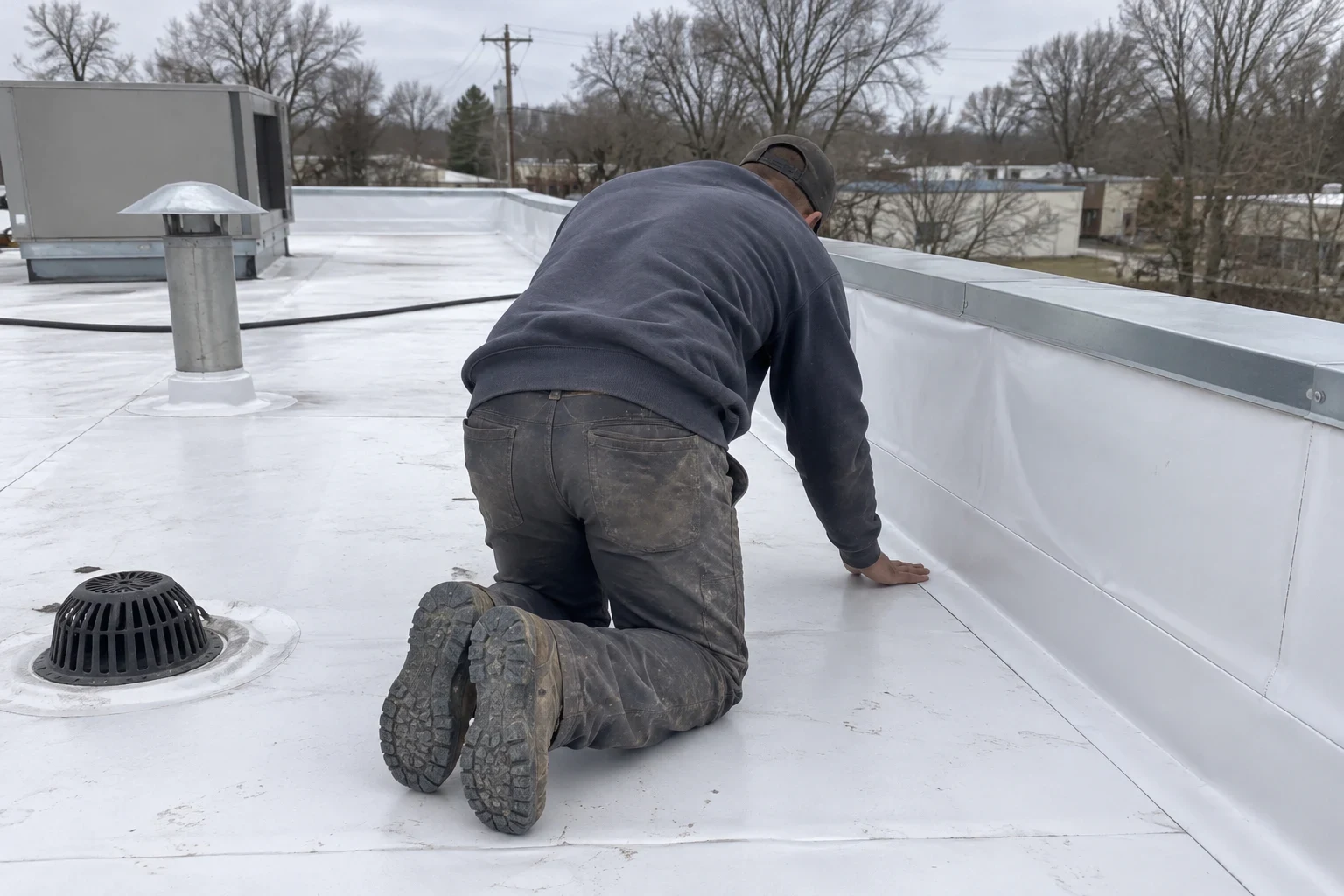
At brick walls, door thresholds and the shingled roof above, the membrane turns up and tucks beneath proper flashing, then is secured with a termination bar and sealant. These junctions are where most flat-roof leaks begin.
Trim metal and daily cleanup
Edge metal finishes the perimeter, chosen to match your trim as closely as possible. Debris is picked up each day, and a magnetic sweep goes over the lawn and driveway to catch loose nails.
Signs your low-slope roof needs attention
- Puddles two days after rain
- A little moisture after a storm is normal. Puddles that linger beyond 48 hours mean the roof has sagged or never drained well, and standing water shortens the life of any membrane.
- Cracked or blistered roll roofing
- Bubbles, alligator cracking and lifted edges show the material has dried out. Each crack is a path for water.
- Stains on the ceiling below
- A brown ring on the porch ceiling or in the room under an addition often traces back to a seam or wall flashing, not the spot directly overhead.
- Soft spots underfoot
- If the roof gives when you walk on it, the decking beneath has likely taken on water. That usually calls for replacement rather than another patch.
- Ice where roofs meet
- Ice that forms along a low-slope edge, or where a flat section meets the main roof, can push water backward under the surface. Indiana's freeze-thaw cycles make that worse each season.
How a TPO job runs
- 1
Free inspection, written estimate
We get up on the roof, look at the decking from the top and from inside where possible, and measure the pitch and drainage. Then you receive an itemized estimate in writing that lays out our findings and our recommendation.
- 2
Permits and the weather window
If the job calls for a permit, we take care of getting it. We book the work for a dry stretch, and in colder months we watch the forecast because adhesives and sealants need moderate temperatures.
- 3
Strip, repair and insulate
On most homes the low-slope section is torn off, repaired, insulated and covered within one day, so the deck never sits exposed overnight. Bigger roofs are worked in sections, and each one is sealed up before we go.
- 4
Seams, flashing and walkthrough
We weld and probe the seams, flash the edges and walls, then go over the finished roof with you in person or share photos. The crew cleans the yard before leaving for the day.
What shapes the price of a TPO roof
A low-slope roof is priced only after we have measured it and seen its condition up close, which is why we hold off on numbers over the phone. Your written estimate breaks the job into separate lines, so every part of the cost is easy to follow. Financing is available if paying over time suits you better.
- Square footage and roof openings
- The size of the section sets the starting point. Each pipe, vent or skylight that passes through the membrane gets its own flashing detail, and those details take time.
- Layers being removed
- A single layer of roll roofing comes off quickly. Tar and gravel, or several old roofs stacked on top of each other, add labor and more debris to haul away.
- Hidden decking damage
- Soft or rotted sheathing is replaced in full sheets. Some of it stays hidden until the old roof is off, so before work begins we put in writing how any extra decking will be handled and billed.
- Slope and insulation
- When the roof already sheds water, flat insulation board is enough. A roof that holds puddles may need tapered board, which costs more in material but fixes the reason water was collecting.
- Membrane gauge and transitions
- A thicker membrane costs more and holds up better to hail and foot traffic. Tying the TPO neatly into brick walls or a shingled slope also takes careful extra hours.
TPO roofing questions
- Can TPO go on a roof that has some slope?
- It can. TPO suits roofs from almost flat up to a moderate pitch. Beyond that, shingles or metal tend to perform better and blend in with the rest of your home. We'll recommend the right material for each section.
- Will a white roof look out of place on my house?
- Most low-slope sections aren't visible from the street at all. If you'd rather have a quieter color, TPO is also made in gray and tan. White has a real benefit in summer, since it reflects sunlight and can help keep the room underneath cooler.
- Can you put TPO over my existing flat roof?
- Code occasionally permits one layer over an old roof, but on a home we seldom advise it. The old material traps moisture, conceals rot and adds weight. Stripping it lets us inspect the deck and repair it before the membrane goes down.
- How long will a TPO roof last?
- The biggest factors are drainage, the quality of the seams and the thickness of the membrane. A roof that drains well and has sound welds will last years longer than one that holds water. That's why slope and flashing get as much of our attention as the membrane.
- Can TPO be installed in winter?
- The membrane itself tolerates cold, and seams can be welded on a cool day. Bonding adhesives and certain sealants need warmer air to cure, so during the coldest weeks we may switch to a mechanically fastened system or wait for a milder spell.
- Is hail damage to a TPO roof covered by insurance?
- Plenty of policies cover hail punctures and wind damage on membrane roofs, though the adjuster decides. On storm claims we work with both you and your insurance company, and we photograph the damage so it's clearly recorded. The Storm Damage Repair page walks through how that goes.
Have us take a look at your flat section
On a free inspection we check the membrane, the seams and how the roof drains, and we look at the decking wherever we can get to it. Afterward you'll hear what we found in plain language, with no push to sign anything.