ServicesRoof Repair
Roof Repair in Lawrence, IN
We find where the water is actually getting in and fix that spot with materials that suit your roof. We also tell you plainly whether a repair will hold. It starts with a free roof inspection, and you see the findings in photos before any work is scheduled.
When a repair is the right call
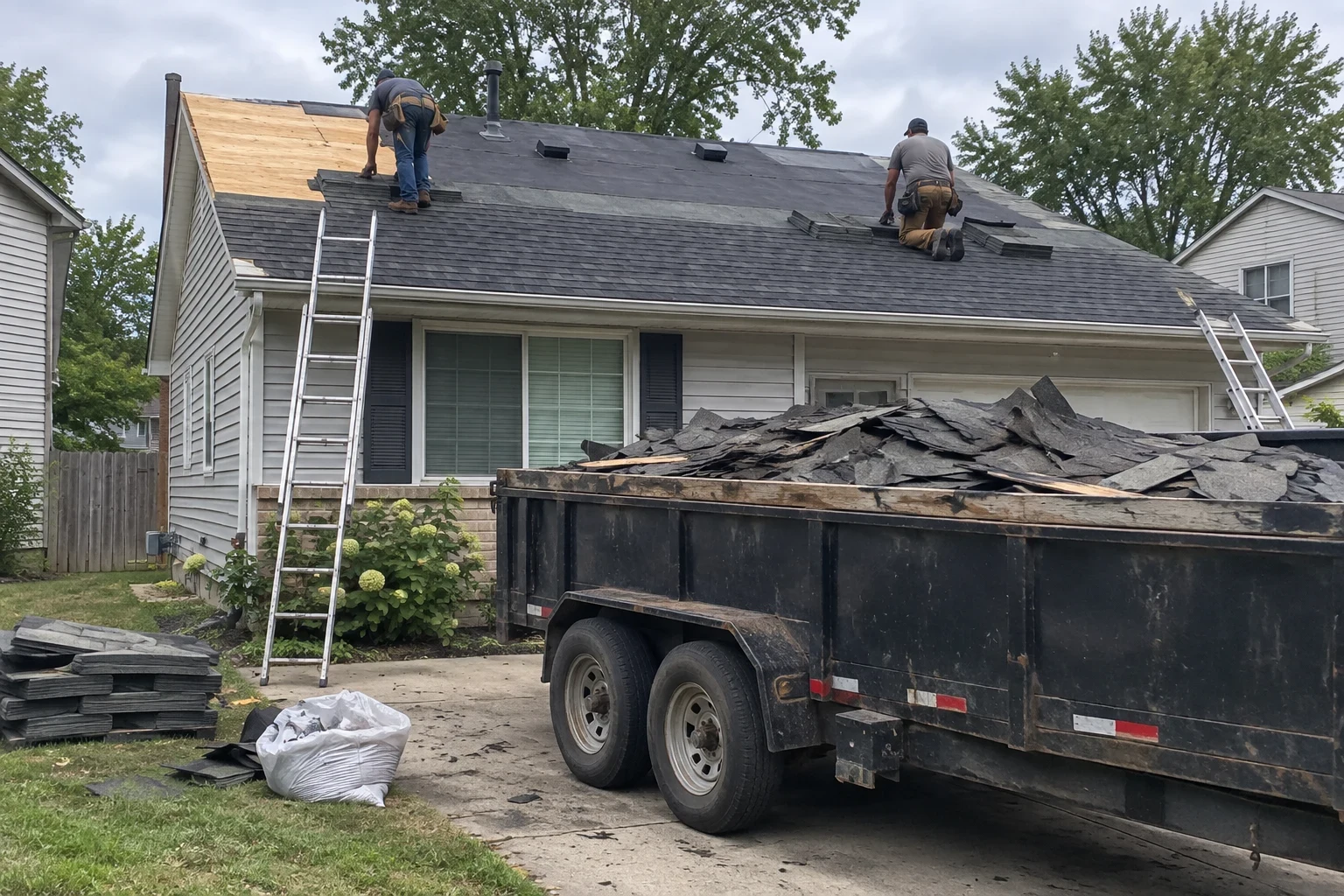
Most roofs that leak don't need replacing. A lifted shingle, a cracked pipe boot or a run of loose flashing at a chimney can let water into your home for months while the rest of the roof still has years left. Our job is to find that one failure and fix it properly.
Central Indiana winters bring freeze-thaw cycles that open small gaps, and spring storms push wind-driven rain under anything already loose. So we look past the stain on your ceiling to the path the water took. That path often starts several feet uphill from where the drip shows.
If the decking is soft across a wide area or the shingles are brittle throughout, we'll say so and walk you through roof replacement instead. If it's a patch, we'll call it a patch.
What our roof repair work covers
Leak tracing
We follow water marks in the attic back along rafters and decking to the entry point, then confirm it from the roof side. Fixing the wrong spot is the most common reason a leak comes back.
Flashing and pipe boots
Step flashing at walls, chimney counterflashing and the rubber boots around plumbing vents usually fail long before the shingles do. We replace boots that have cracked in the sun. Flashing gets resealed or rebuilt, not smeared over with caulk.
Shingle replacement
Missing, creased or cracked shingles are replaced one by one, nailed to the manufacturer's pattern and sealed down. You see the replacement shingle next to your existing ones before it goes up, so the blend is your call too.
Decking and underlayment
When the plywood or board sheathing has gone soft from water, we remove just the weakened area and fit new boards with fresh underlayment on top. The shingles go back over it so the patch lies level with the surrounding roof.
Valleys, ridges and vents
Worn valleys, ridge caps split by wind and loose roof vents are frequent leak points. We repair them so they shed water the way they were built to.
Cleanup
Old nails, shingle scraps and empty sealant tubes leave with us. We sweep the lawn and driveway with a magnet before we go.
Signs your roof needs a repair
- Stains on ceilings or attic decking
- Brown rings on a ceiling or dark streaks on the underside of the roof deck mean water is getting in. A stain that grows after each rain is an active leak.
- Shingle pieces in the yard
- After a windy night, pieces of shingle on the ground mean there's a gap above. Exposed nails and felt won't keep out the next rain for long.
- Cracked boots or lifted flashing
- From the ground, look at the vent pipes and where the roof meets a wall or chimney. Gaps, rust or curled metal there are worth a closer look.
- Heavy granules in the gutters
- Some granule loss is normal on new shingles. Thick piles from an older roof point to worn areas that may start leaking soon.
- Ice ridges along the eaves
- Thick ice at the roof edge in January can force meltwater back under the shingles. If you've seen drips indoors during a thaw, the eave area needs attention.
How a repair day runs
- 1
Free roof inspection
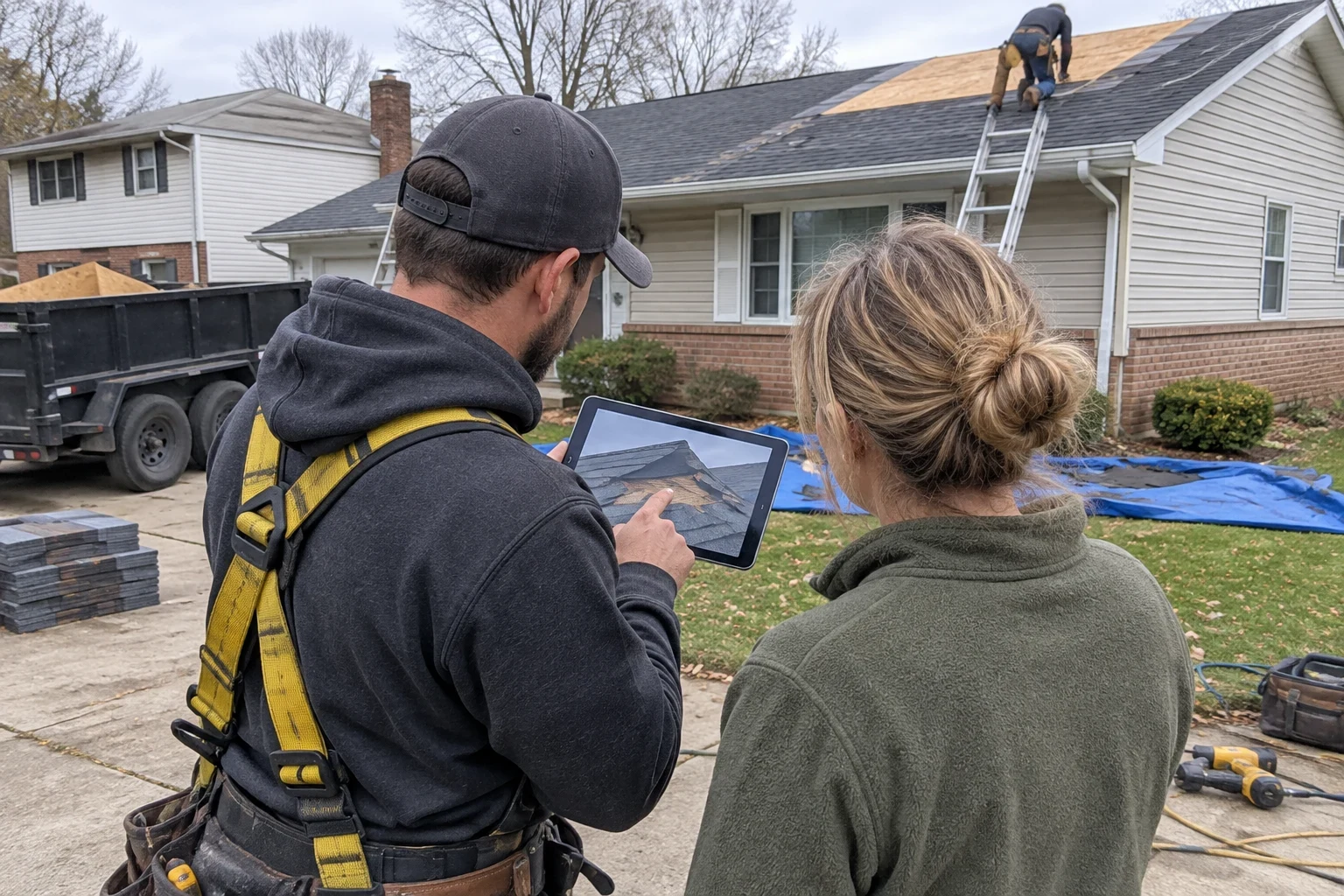
We check the roof and, where we can reach it, the attic. Our photos show you each problem spot, and we tell you straight whether a repair makes sense or whether the roof is past that point.
- 2
Itemized estimate
The estimate lists each part of the work and the materials we'll use. If the decking under a damaged area is in question, we note how we'll handle it so it doesn't become a surprise later.
- 3
The repair itself
Most repairs take a few hours to a day. We protect plantings near the work area, keep ladders off your gutters where we can, and don't leave a section open when rain is expected.
- 4
Walkthrough and cleanup
When we finish, we show you before and after photos of the repaired area. Then we clear the ground around your home of debris.
What affects the cost of a roof repair
Repair pricing depends on what we find once shingles come up, so we keep the estimate itemized and explain each line before work begins. Financing is available if you'd rather spread the cost. When wind or hail caused the damage, we work with you and your insurance company on the claim, and the Storm Damage Repair page walks through that process.
- Size and spread of the damage
- A single cracked boot is a short job. Leaks that have traveled along several rafters take more time to open up and close properly.
- Pitch and access
- Steep slopes need extra safety setup, and tight spots near a second story or a deck take longer to work around.
- Condition of the decking
- Sound sheathing keeps the job simple. When the wood has gone soft or rotted, that section comes out and fresh sheathing goes in, which adds material and time before any shingles are laid.
- Matching materials
- Common shingle lines are easy to source. Discontinued colors or older profiles may take more searching to get a close match.
- Flashing details
- Rebuilding flashing at a chimney or along a sidewall involves more labor and metal than resealing a vent.
Roof repair questions
- Can you fix one section without replacing the whole roof?
- Often, yes. If the rest of the roof is sound and the problem is local, a repair is the sensible choice. We only suggest replacement when wear is widespread or repeated repairs would cost more over time.
- Will the new shingles match my roof?
- We look for the same brand, shade and shape that's already on your home, then hold a sample up against your existing shingles so you can judge it before work starts. Shingles that have weathered for years lose some color, so a new patch can look a touch darker at first and settles in as it ages.
- Do I need a permit for a roof repair?
- Many small repairs don't require one, but requirements depend on the scope of work and the local building department. If your job grows into a large section or a full replacement, we'll tell you what's needed and pull the permit.
- Can you repair a roof in winter?
- Yes, within limits. The adhesive strip on a shingle needs the sun's warmth before it grips, so during colder months we set each new shingle with a bead of roofing cement applied by hand. Larger repairs that involve opening the deck are planned around dry days.
- How do I know the repair will last?
- We fix the cause, not just the symptom, and photograph the work so you can see what was done. If we think the surrounding roof is near the end of its life, we'll tell you that up front rather than sell you a patch that won't hold.
Have the leak looked at before it spreads
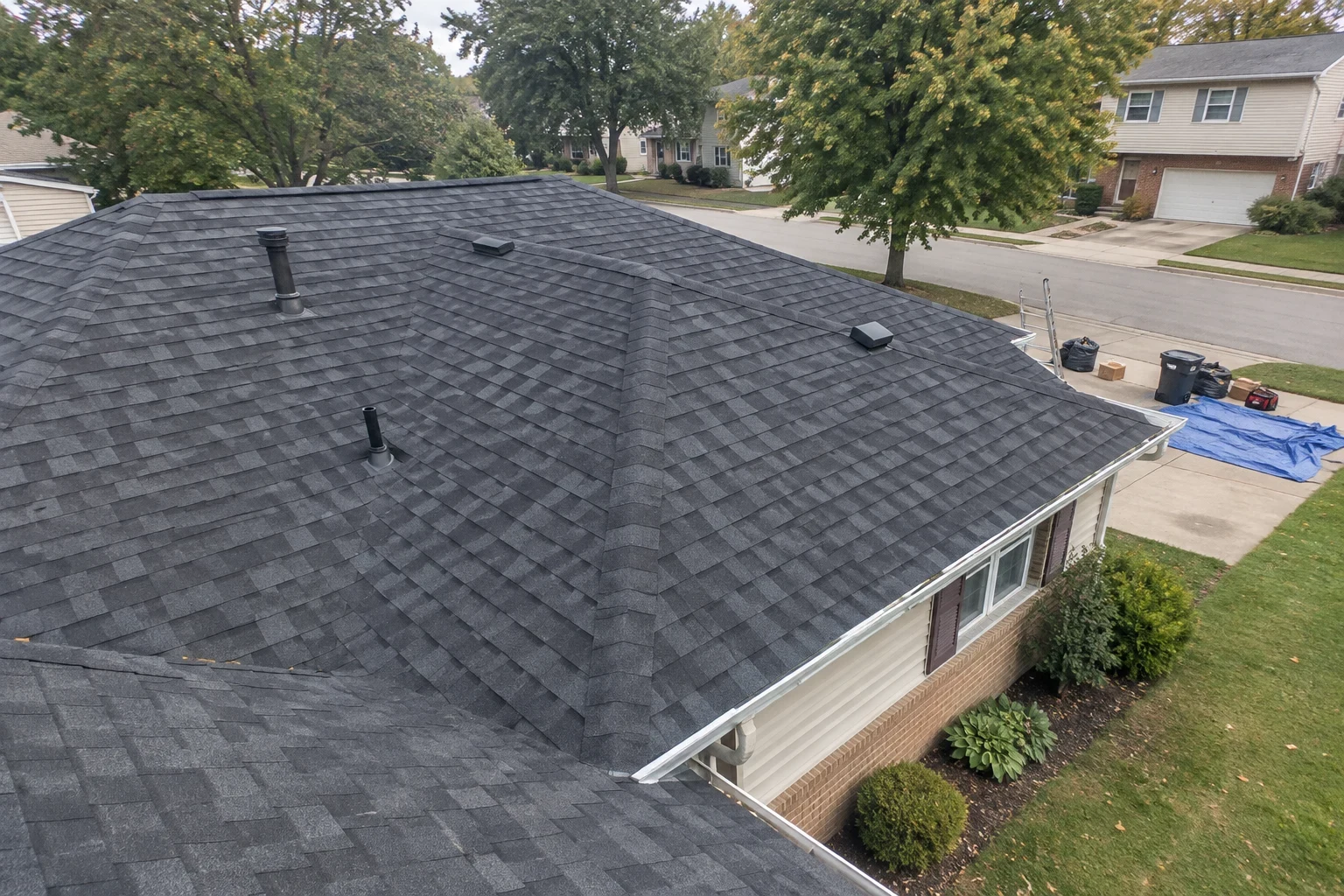
A small leak today can turn into wet insulation and soft decking after another season. We'll inspect your roof at no cost, show you photos and tell you what it needs.