ServicesStorm Damage Repair
Storm Damage Repair in Lawrence
Once the hail or wind has passed, we inspect your roof slope by slope and document every spot the storm reached. You hear a clear answer on whether it calls for a repair, a larger rebuild or an insurance claim, and the finished work blends with the roof on your home.
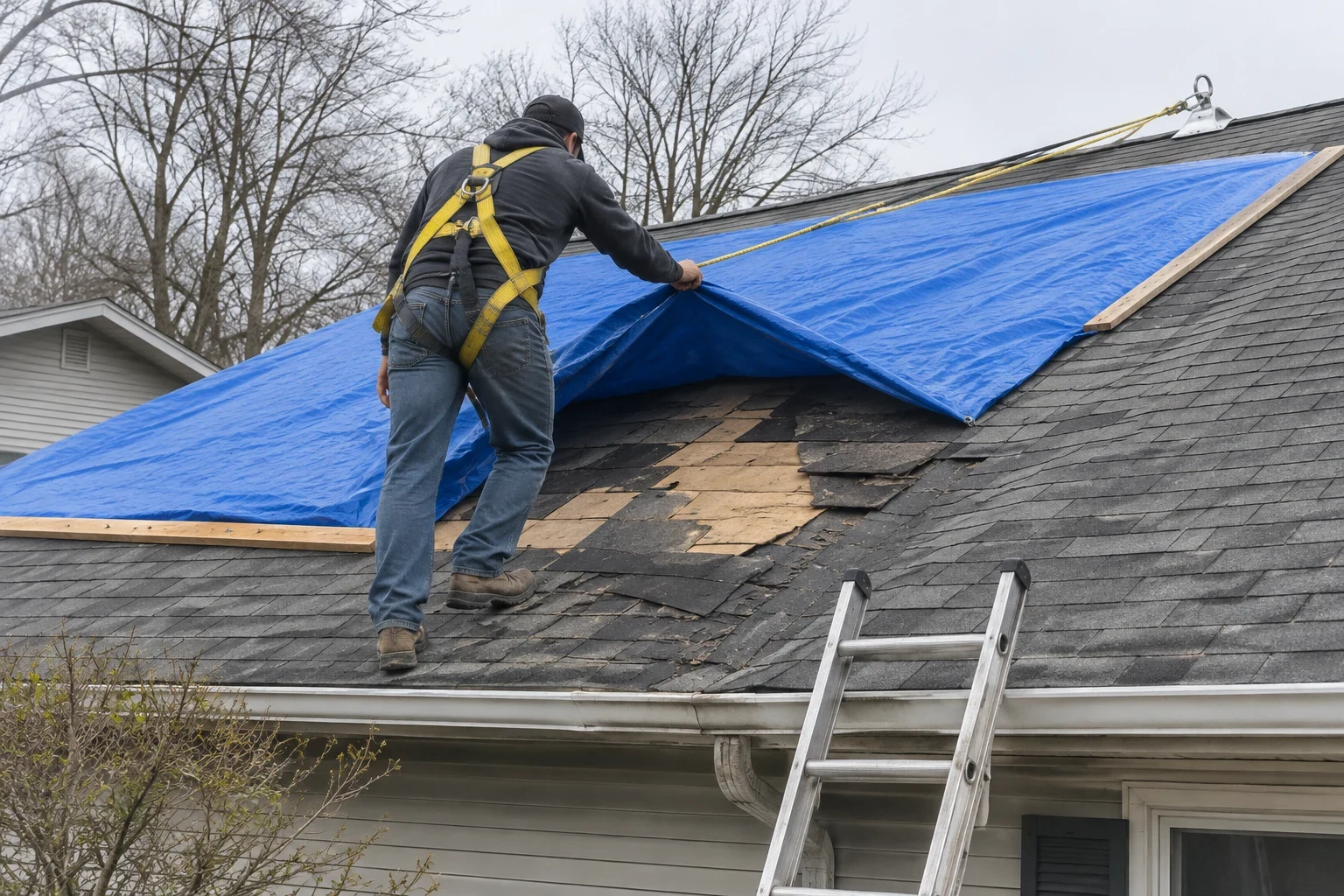
When storm damage repair is the right call
A storm seldom leaves a hole you can spot from the street. Hailstones can dent a shingle without cracking it, stripping away the granule layer that protects the asphalt underneath from the sun. A strong gust can pull a tab loose from its adhesive strip, and once unsealed it lifts again with the next wind and lets water slip under. You cannot see either from the driveway, yet both cut years off a roof.
We begin by finding out exactly what the storm did, then we repair it or explain plainly when the roof needs more than a repair. Hail tends to arrive here in spring and straight-line winds follow through summer, so these patterns are familiar to us. That familiarity helps us separate new storm damage from normal aging, which is the same line your insurer will draw.
If you file a claim, we stay involved on both sides, with you and with your insurance company. You get a clear explanation of each step, our photos and measurements go to whoever needs them, and the repair scope stays accurate to what the storm caused. The adjuster makes the coverage decision, and we say so at the first visit.
What is part of a storm repair
- Photo documentation of the whole roof
- We go over each slope, ridge and valley, plus the vents, flashing, gutters and downspouts. Every damaged spot is photographed and dated so you see the same evidence we do.
- Checking for hail and wind damage
- On shingles we look for bruises, cracks, missing granules, creases and seal strips that have let go. Metal and flat roofs get checked for dents, punctures and seams that have pulled up.
- Short-term protection
- A storm can open the roof while the permanent fix still waits on materials or an insurer's decision. In that case we tarp and fasten the exposed area so rain cannot reach your home until the repair is done.
- Repairs that blend and hold
- We choose replacement shingles for the closest available match in profile and color, then seal each one by hand so it stays put through the next windy season. Damaged flashing and vent boots are swapped for new parts rather than covered with patches.
- Gutters and roof edges
- Hail leaves gutters dented and strong wind can pull them away from the fascia. If the storm reached your gutters, that repair is folded into the job and listed in the same report.
- Leaving the property tidy
- Old shingles, nails and debris are picked up from beds and grass, and we run a magnet over the driveway before we go.
How to tell a storm damaged your roof
Grit collecting at downspouts
After hail, a noticeable pile of dark, gritty granules where the downspouts empty usually means the shingles have lost part of their coating.
Pieces of shingle on the lawn
A single tab lying in the grass suggests the shingles around it may be creased or loose too.
Dimpled gutters and vents
Small dents in gutters, vent caps or downspouts show the hail struck hard enough to harm the roof as well.
Fresh stains inside
Water spots on a ceiling or drips in the attic after a storm signal an opening overhead, often around flashing or an unsealed shingle.
Tabs that move in the wind
A shingle that lifts or flutters has let go of its seal. Water keeps finding its way in until it is resealed or replaced.
What shapes the price of a storm repair
Every storm strikes a roof differently, so the price follows what the inspection actually finds. If your claim is approved, the insurer's payment and your deductible set the share you pay yourself. Financing is available for work your coverage does not reach.
How far the damage spreads
A few loose tabs on one side of the roof take little time and few materials. Bruising across every slope is a larger job and can make full replacement the sounder choice.
What sits under the shingles
Once damaged shingles come off, we check the decking. Wood that has stayed wet since the storm softens and has to be cut out and replaced, which adds material and labor.
Flashing, vents and gutters
Bent flashing, cracked vent boots and dented gutters are each separate line items. The more of these the storm reached, the more parts the repair needs.
Matching the existing roof
Some shingle lines are easy to source and others have been discontinued. Finding the closest match in profile and color can affect both cost and how much area we replace.
Roof pitch and access
Steep slopes, multiple stories and tight spots near trees call for extra safety setup and slower work, which shows up in the labor line.
How a storm repair moves along
- 1
Your free inspection
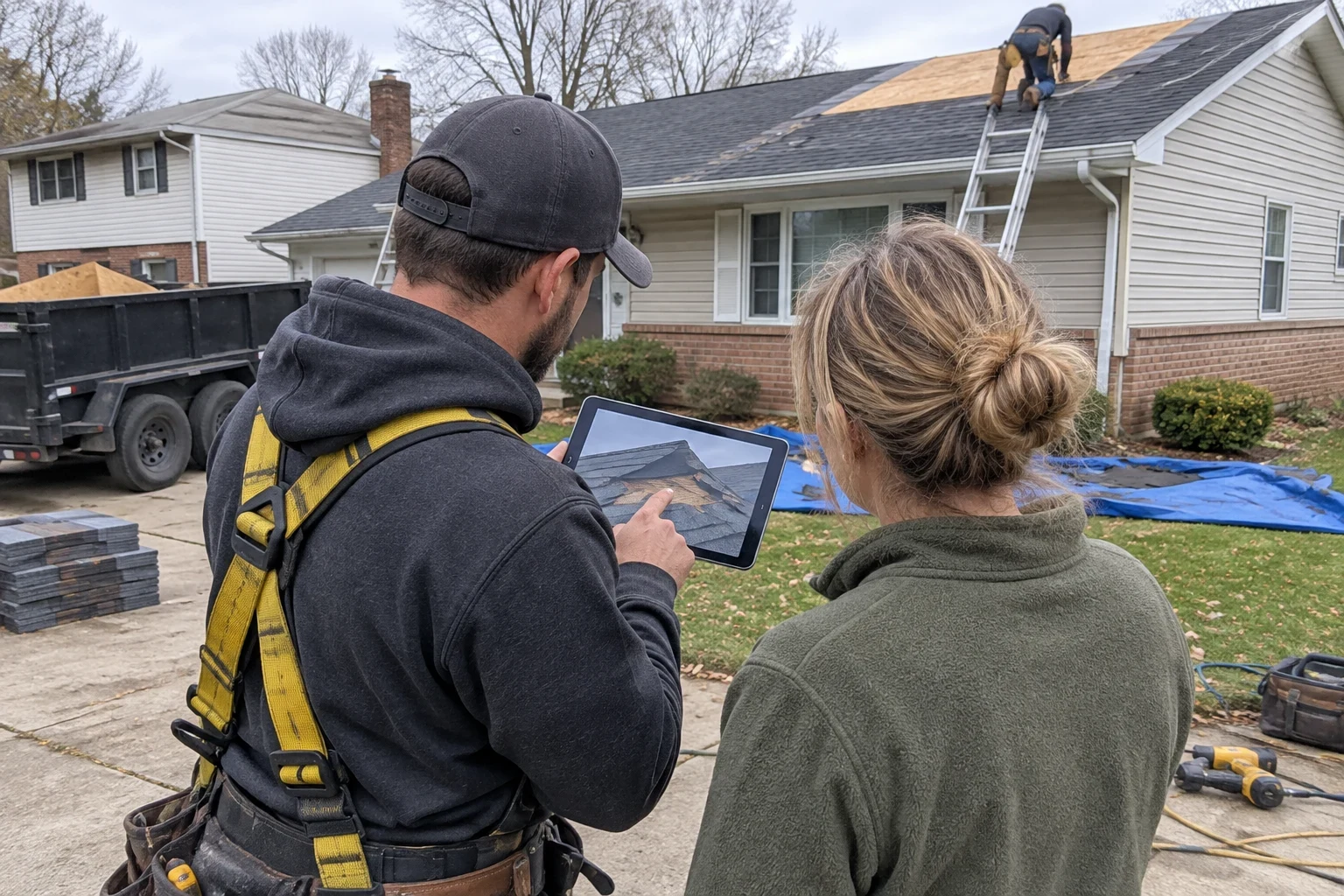
We arrange a visit to check the roof and gutters. Afterward we sit down with you over the photos and give you an honest read: a repair, a claim, or both.
- 2
A scope in writing
Our estimate breaks the job into lines, showing each material, how much of it, and any decking or flashing work. You are free to pass it to your adjuster if you file a claim.
- 3
Help with the claim
When the adjuster comes out, we can meet them on the roof and show what we recorded. We will explain the paperwork as it comes, while the insurer keeps the final say on coverage.
- 4
The repair itself
We cover plantings and the sides of the house, strip the damaged materials and check the decking underneath. New components go on and are sealed following the manufacturer's instructions. Most storm repairs are wrapped up in one day.
- 5
Walking the finished roof
We go over the completed repair with you, hand over photos of the finished work and leave the yard and drive clean.
Common questions about storm repairs
How long can I wait to have the roof looked at after a storm?
Sooner is better, ideally within a few weeks. Insurance policies usually limit how long you have to report damage, and even a small opening lets moisture work into the decking. The inspection is free, and it tells you whether there is anything worth reporting at all.
Can you help with my insurance claim?
Yes. We help homeowners with storm damage claims and work directly with insurance companies along the way. You get our dated photos and a line-item estimate, and if you like, we will be on the roof when the adjuster visits. The insurer decides coverage, and the claim remains yours to manage.
Does hail damage mean I need a new roof?
Often it does not. Damage that is light and scattered can usually be repaired. When bruising covers several slopes, patching rarely holds up, and we will be straightforward about which situation you are in. Our roof replacement page explains how a full replacement runs.
Will repaired areas match the rest of my roof?
We choose shingles that come as close as possible in profile and color to what is on your home now. Your existing shingles have weathered in the sun, so new ones can look a shade different at first and usually settle in over a few seasons. You will see samples before any work begins.
Can I finance a storm repair?
Yes, financing is available. Homeowners use it for work their policy leaves out or to manage a deductible on a bigger repair. We go over the options when we review your estimate together.
Know where your roof stands after the storm
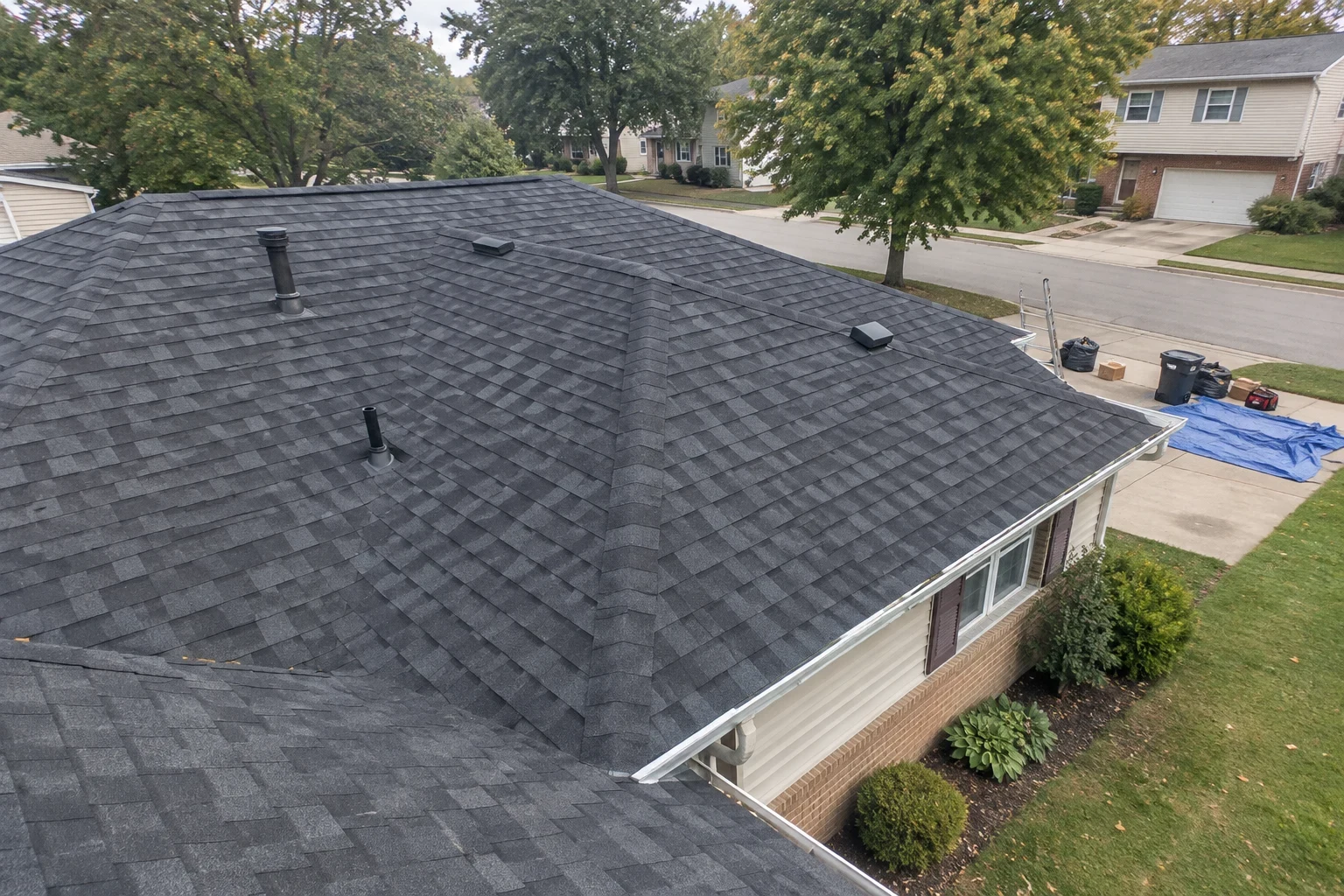
We will check the roof and gutters, take photos of anything the weather damaged and explain your next step in plain terms. That way you can weigh a repair or a claim with the facts in hand.