ServicesRoof Inspections
Roof Inspections in Lawrence, IN
We go over your roof surface, flashing and vents, then check the attic from below. Each finding is photographed, and you get a straight answer on what needs work soon, what can wait a season and what is in good shape.
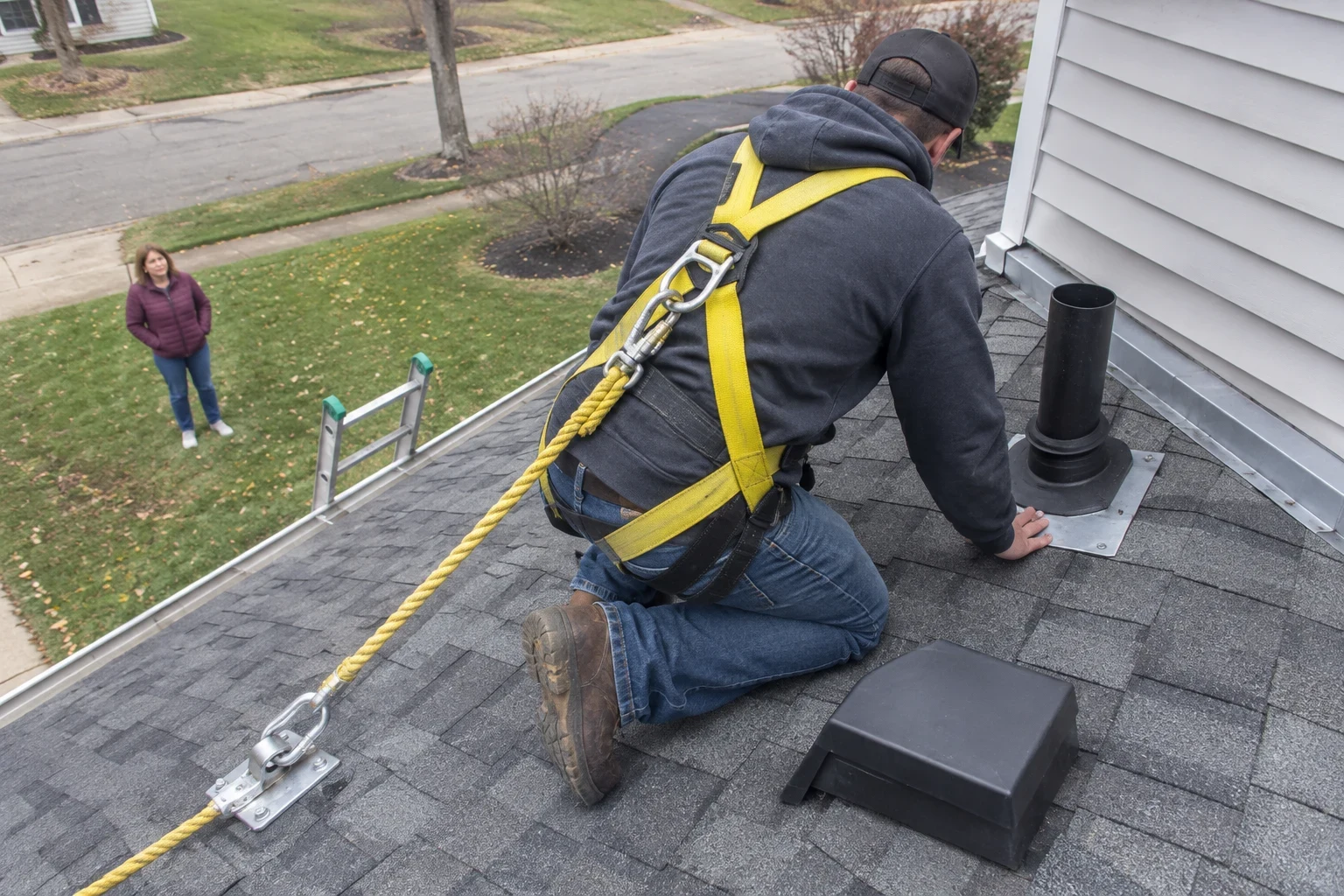
A clear picture of your roof before you spend anything
Most roof problems start small and quiet. A lifted shingle tab, a cracked rubber boot around a plumbing vent, a bit of flashing that has pulled away from the chimney. None of these show from the driveway, and by the time a stain appears on a ceiling, water has usually been getting in for a while.
An inspection is the right call when you are unsure about your roof's condition, after a hard season, before buying or selling, or when a contractor has told you that you need a new roof and you want a second opinion. Central Indiana winters bring repeated freeze and thaw, which works water into small gaps and widens them, so spring and fall are sensible times to have a look.
The inspection is free. You get an honest read on what you have, and you decide what to do with it.
What a full inspection covers
- Roof surface
- On asphalt we watch for creased, lifted or missing shingles, bare spots where granules have worn away, blisters and decking that gives underfoot. On metal and TPO roofs we turn to fasteners, seams and the condition of the membrane.
- Flashing and vent boots
- Most leaks start where something passes through the roof: chimneys, skylights, sidewalls and plumbing stacks. We confirm the metal is tight and sealed and the rubber boots have not split.
- Attic and decking
- Underneath, we look for pinholes of daylight, water rings, wet or matted insulation, winter frost on nail tips and sagging boards. The attic often tells the story the shingles hide.
- Airflow
- An attic that cannot breathe bakes shingles in July and feeds ice dams in January. We check intake at the soffits, exhaust at the ridge and whether air actually moves between them.
- Gutters and runoff
- Clogged or sagging gutters, short downspouts and soft fascia all get noted. Water that pools at the eaves tends to creep under the lowest row of shingles.
Signs your roof is due for a look
Grit at the downspouts
The sandy coating on asphalt shingles wears off over the years. A little after a heavy rain is expected; a steady pile means the shingles are getting thin.
Ceiling rings or a musty upstairs closet
Tan or brown marks overhead, or a damp smell near the roofline, usually trace back to a slow leak above.
Ice along the eaves last winter
Heavy ice at the edge of the roof means warm air is leaking into the attic. Meltwater trapped behind it can work its way under the shingles.
A recent hail or wind event
Hail bruising rarely shows from the yard. If roofs on your street are being replaced, it makes sense to learn how yours fared.
An asphalt roof around 20 years old
That is roughly when many shingle roofs begin to show wear. Knowing its condition lets you budget ahead instead of scrambling after a leak.
A home sale on the calendar
A documented roof condition gives buyer and seller the same facts early, before it can slow down closing.
How the inspection works
- 1
A short conversation by phone
Tell us what prompted the call and any clues you have noticed, from a ceiling stain to grit collecting at a downspout. We settle on a visit time that suits you and say ahead of time whether the attic is part of the plan.
- 2
Up on the roof
When the roof is safe to walk, we work one slope at a time and photograph anything worth a second look. On steep or brittle roofs we stay on the ladder and inspect from the edges so we do no harm.
- 3
Up in the attic
A quick look at the underside of the decking, the insulation and the vents. Drop cloths go down along the path so ladders and boots never touch your floors.
- 4
Going over the findings
We sit down with the photos and sort each item into three groups: handle it now, keep an eye on it, or leave it be. If work is warranted, you get a written estimate itemized line by line.
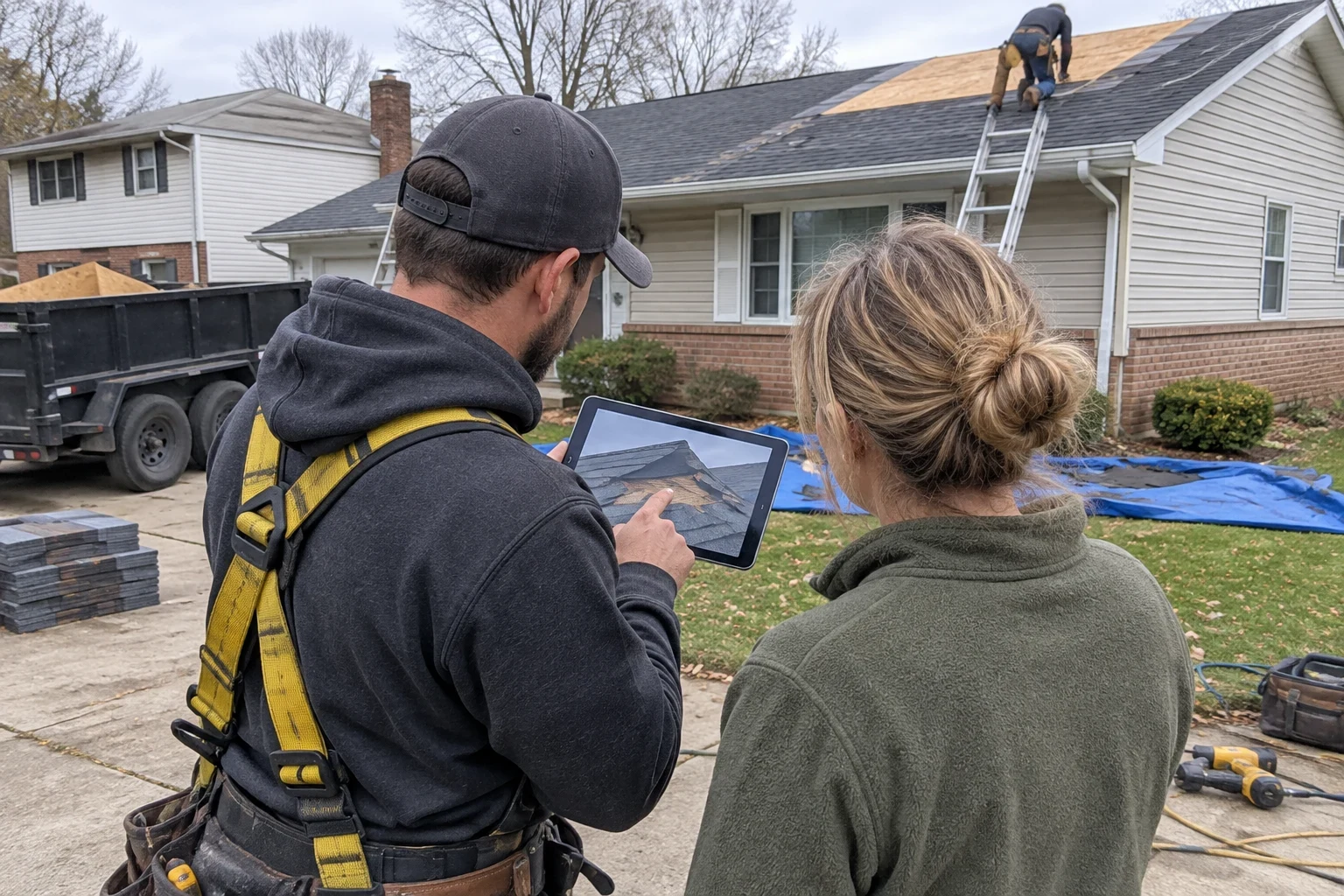
What it costs and what follows
There is no charge for the inspection, and nothing to sign or book once we leave. Any repair price is based on the conditions we actually document, so you see the photos before you see a number. Financing is available for larger projects.
- How much is involved
- Replacing a single cracked pipe boot is a small job. Swapping out a section of rotted decking is a much bigger one. We price the work we photographed, not an assumption.
- What sits under the shingles
- Soft decking only reveals itself once the old roofing comes off. If we see hints of it from the attic, we mention it up front so the possibility is already on the table.
- Pitch and access
- A steep slope, a tall two-story eave or a tight side yard means more setup time and more safety equipment.
- Fixing versus starting over
- When repairs would approach the cost of a new roof, we lay out roof repair and roof replacement next to each other and explain the tradeoffs of each.
Roof inspection questions
Something not covered here? (317) 648-9220
How long will the inspection take?
For an average single-family roof, usually less than an hour. Multiple shingle layers, a large footprint or a cramped attic hatch can stretch that. We can give you an estimate of the time over the phone once we know a little about your home.
Does someone have to be home during the visit?
It helps to have someone there, since we need a way into the attic and the photos are easier to talk through face to face. When that is not possible, we can inspect the outside of the roof on our own. Afterward we call you and walk through each finding and photo together.
Are you going to push me toward a new roof?
No. Many roofs we look at need a minor fix or nothing at all, and that is what we tell those homeowners. If replacement is the sensible choice, the photos make the reasons plain.
Will an inspection help if I file an insurance claim?
It can. When we find hail or wind damage, our dated photos and notes give you a solid record to hand to your insurer. We work with homeowners and insurance companies on storm damage claims, and the storm damage repair page covers how that works.
How often should a roof be checked?
Every one to two years suits most homes, along with a look after any serious storm. Once a roof passes its midlife, a yearly visit is worth it so small problems stay small.
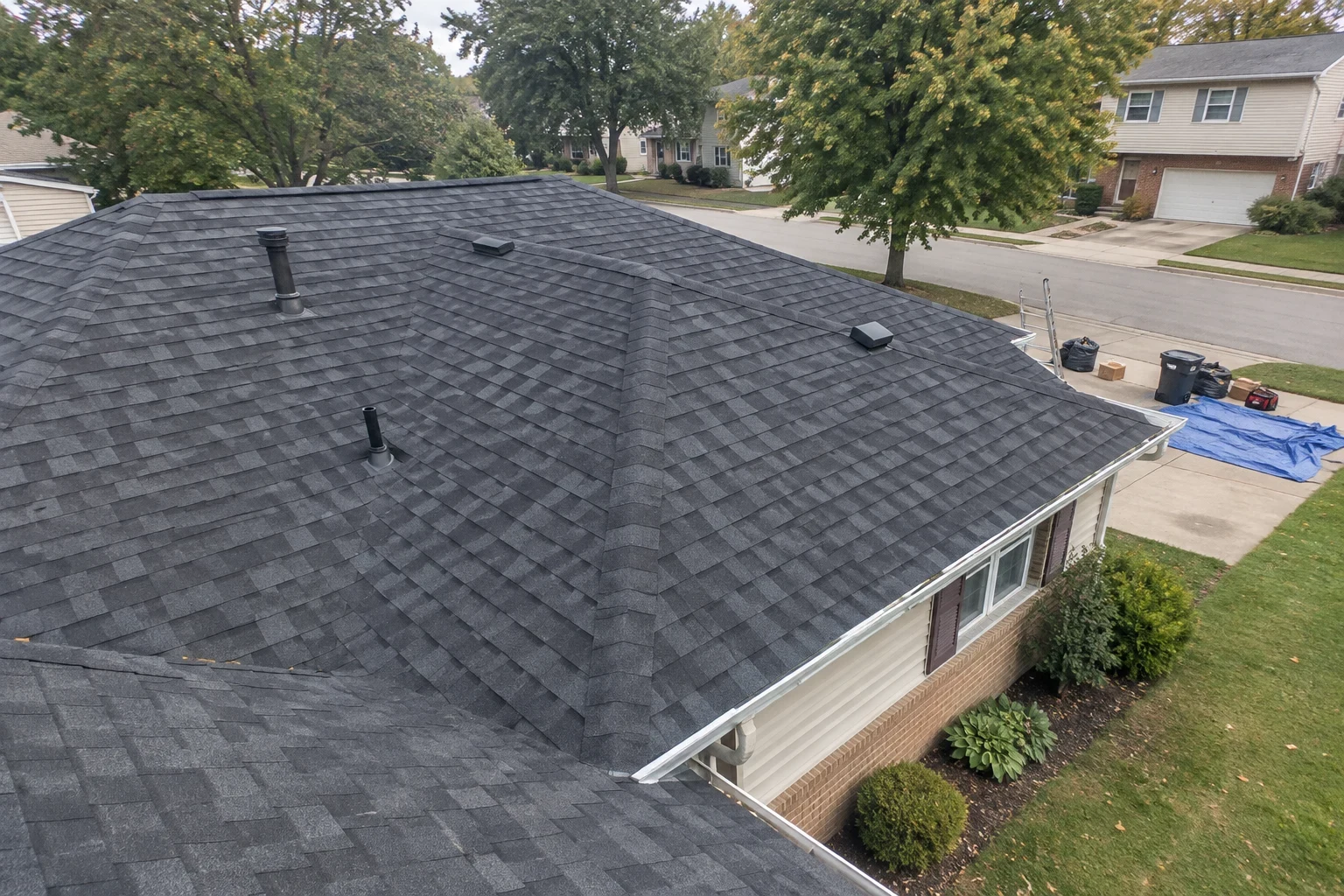
Find out where your roof stands
One visit gives you photos, a plain explanation and a clear sense of what, if anything, needs doing. We serve Lawrence and nearby towns including Fishers, McCordsville and Cumberland.