ServicesMetal Roofing
Metal Roofing in Lawrence, IN
We install standing seam and exposed-fastener metal roofs with the underlayment, trim and flashing work that keeps them quiet, watertight and handsome for decades. Every project begins with a careful look at your roof and a straight answer on whether metal suits your home.
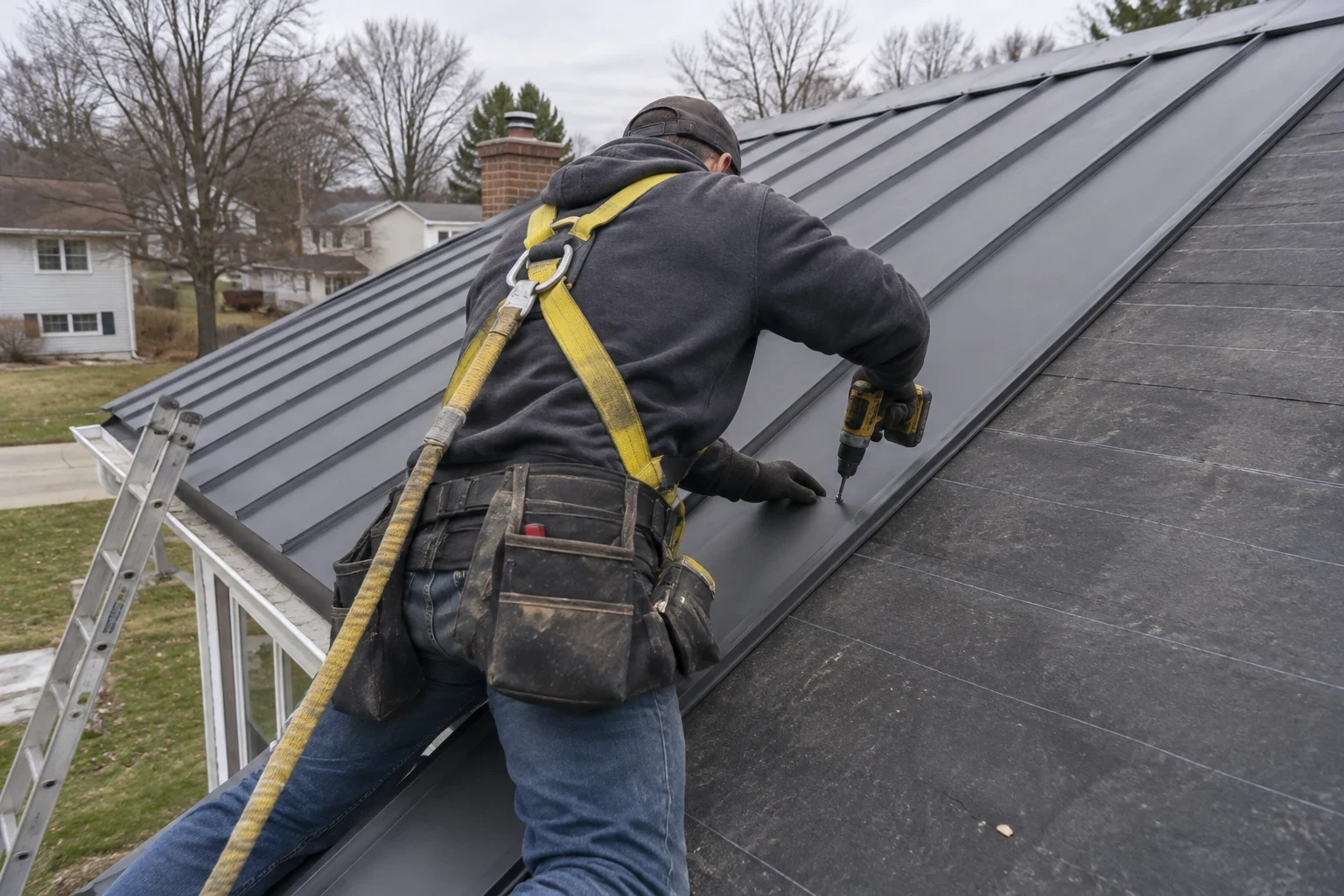
A roof you choose once and live with for a long time
Metal roofing comes in two broad families. Standing seam panels lock together over hidden clips, so no screw ever pierces the face of the roof. Exposed-fastener panels are screwed straight through the metal, with a rubber washer under each head. Both work. The difference shows up years later, when those washers have dried out and the hidden-clip roof has not changed.
Central Indiana asks a lot of a metal roof. A panel can sit below zero in January and well past 150 degrees on a July afternoon, and it grows and shrinks with every swing. We use clips and trim that let the metal move without working the fasteners loose, and we plan where snow will slide before the first panel goes up.
Metal is not the answer for every house. If you expect to sell within a few years, a well-installed shingle roof often makes more sense, and we will say so. Our Shingle Roofing page explains that option.
What a metal roof installation includes
- Tear-off and deck review
- The old roofing comes off down to bare decking, and we check each sheet. Any board that is soft or coming apart gets replaced first, since metal panels show every dip in the surface below.
- High-temperature underlayment
- A metal roof gets hotter than a shingle roof, so the synthetic underlayment we use is rated for that heat. At the eaves and through the valleys, a peel-and-stick ice barrier protects the spots where winter melt and ice dams cause trouble.
- Panel profile, gauge and color
- We compare standing seam with exposed-fastener panels, explain steel thickness and go over paint finishes. You judge color samples outdoors in daylight, next to your own brick and trim, rather than on a screen.
- Flashing and trim fabricated to fit
- Around chimneys, sidewalls, skylights and plumbing vents, we bend flashing to suit the panels you chose. Leaks on metal roofs nearly always start at these details, so this is where we slow down.
- Snow guards and ventilation
- Snow guards go above any walkway, porch or gutter run that sliding snow could hit. A ridge vent lets the attic exhale, which keeps condensation from forming beneath the deck.
- Shaving-free cleanup
- Every cut in steel throws off tiny shavings, and left on the roof they rust and mark the new paint within weeks. We brush the panels as work moves along, then sweep the lawn and driveway with magnets at the end of the job.
Signs metal roofing may be the right next step
Your shingles are failing again
If you are facing a second or third shingle roof on the same house, the longer life of metal starts to pay for itself.
Ice dams every winter
Metal sheds snow before it can build a ridge of ice at the eaves. Paired with good attic ventilation, that can end the yearly drip at the ceiling.
A low-slope porch or addition leaks
Shallow pitches hold water that shingles cannot handle. Standing seam is rated for much lower slopes.
Screws backing out on an older metal roof
Exposed fasteners loosen and their washers crack with age. Rust streaks or drips near screw heads mean it is time to re-fasten or replace.
Repeated hail damage
Heavier gauges and textured finishes hide minor hail better than smooth, thin panels or worn shingles.
What shapes the price of a metal roof
A metal roof starts higher than a shingle roof, and the gap depends largely on the roof already on your home. We price from real measurements and from the condition of the deck, so the written estimate reflects your roof rather than a rough average. If anything hidden would change the scope, we show you before work continues. Financing is offered for homeowners who prefer to spread the cost out.
Hidden-clip or screw-down panels
Standing seam with concealed clips uses more steel and more careful hand work than exposed-fastener panels. Heavier gauge steel adds to the material cost but resists dents better.
Roof shape
Every valley, dormer and chimney needs its own trim piece and slows the crew down. A plain gable roof moves along quickly, while a hip roof with many cuts takes far longer.
Deck condition and old layers
Two layers of old shingles to strip, or soft decking underneath, add labor and material. Before we replace any boards, you see photos of what we found.
Finish and accessories
Higher-grade paint systems keep their color longer under summer sun. Snow guards, ridge vent and skylight flashing each appear as their own line on the estimate.
How a metal roof project runs
- 1
Free inspection and measurements
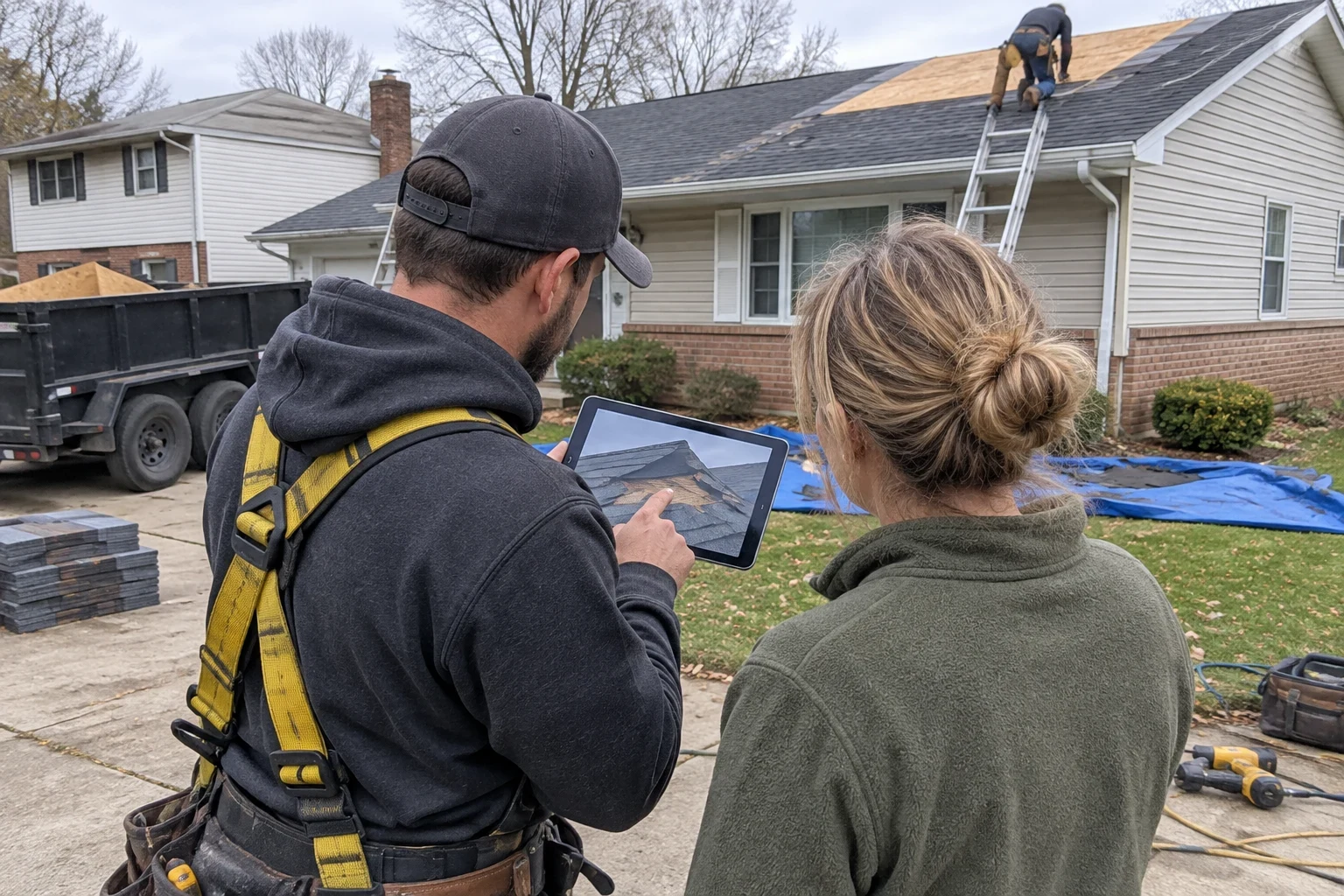
We check the roof surface, the attic and the ventilation, measure every plane and photograph what we see. We also ask how many years you expect to stay in the house, since that shapes whether metal makes sense.
- 2
Written estimate with the details spelled out
Your estimate lists the panel profile, gauge, color, underlayment and trim line by line. If something hidden under the old roof might change the work, we name it before you sign.
- 3
Permit and material order
Where Lawrence or your town requires a permit, we pull it. Many panels are cut to exact length for your roof, so measurements are double-checked before the order goes in.
- 4
Installation days
We only strip as much roof as we can dry in the same day, so your home is never open overnight. Plantings and walls are covered with tarps and boards, and panels go on after the underlayment and edge trim are set.
- 5
Final walk and cleanup
Together we look over each flashing detail, then the crew sweeps and magnets the property. You receive photos of the decking and the finished roof for your records.
Metal roofing questions we hear
Is a metal roof loud when it rains?
Not the way we build it, with panels laid over solid decking and underlayment. The drumming most people picture comes from bare metal on an open barn frame. In a finished house with an insulated attic, a rainstorm sounds much like it does on shingles.
Can you install metal on top of the shingles I have now?
Some roofs qualify, but a complete tear-off is usually our advice. Stripping the old layer lets us check and repair the decking, and it keeps moisture from getting trapped between old and new. During the inspection we will walk through the pros and cons for your particular roof.
Will hail dent it?
Large enough hail can mark any metal. Thicker gauges and textured finishes hold up better and hide small dings. Most dents are cosmetic and do not open a leak. If hail does damage your roof, we can help with the insurance side too, working alongside you and your insurer on the claim.
Does snow come sliding off all at once?
It can, so we account for it in the layout. Snow guards placed above entries, walkways and gutters keep the snow on the roof until it melts away in stages rather than dropping in one heavy sheet.
Does a metal roof attract lightning?
No. Lightning finds the highest point nearby, whatever it is made of. Metal also does not burn, so embers or a strike will not set it alight the way they can with wood.
See whether metal is right for your roof
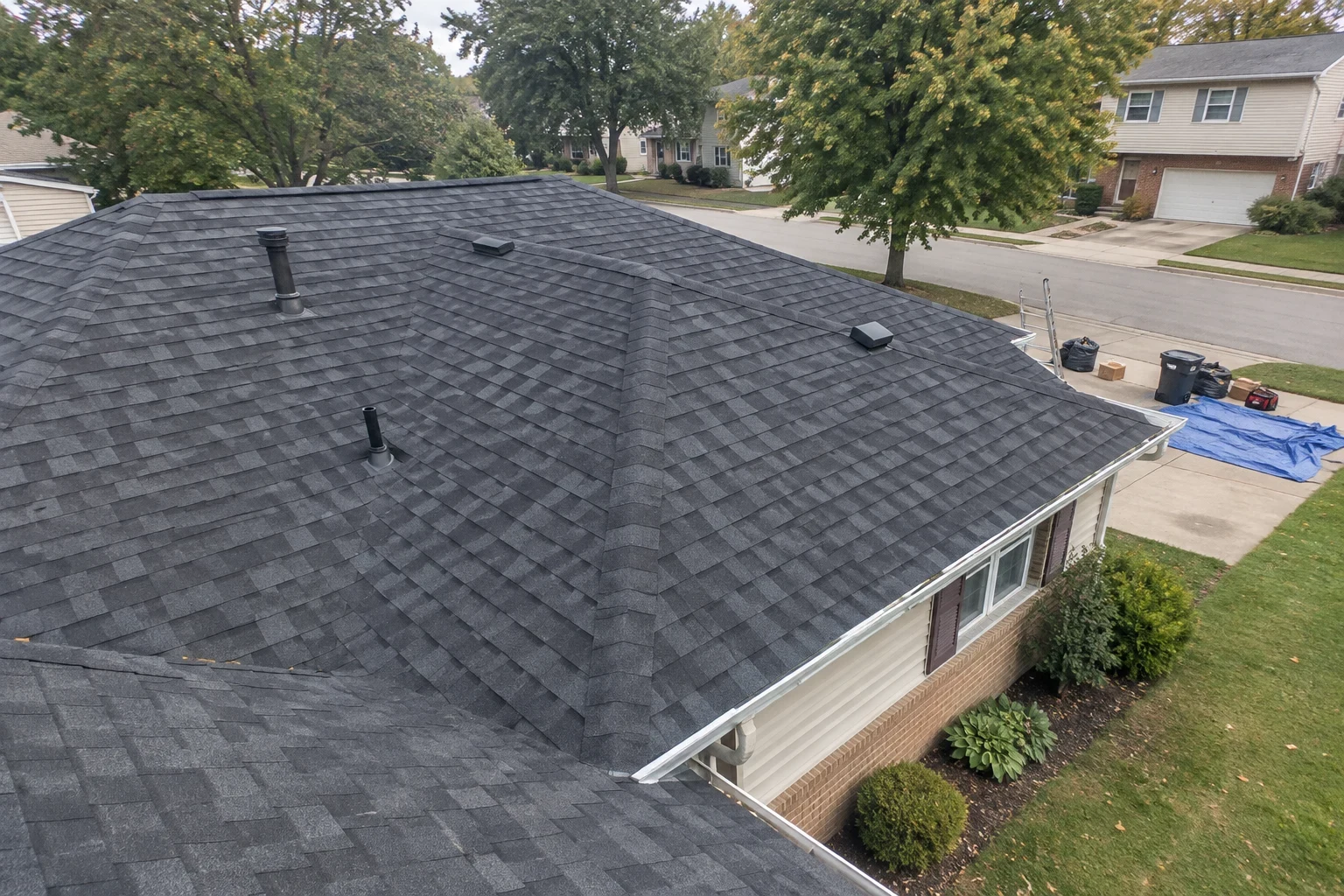
A visit covers your pitch, attic and existing roofing, and ends with a plain recommendation on metal or shingles. We give homeowners in Fishers, Greenfield and the rest of the Lawrence area the same unhurried look.