ServicesRoof Replacement
Roof Replacement in Lawrence, IN
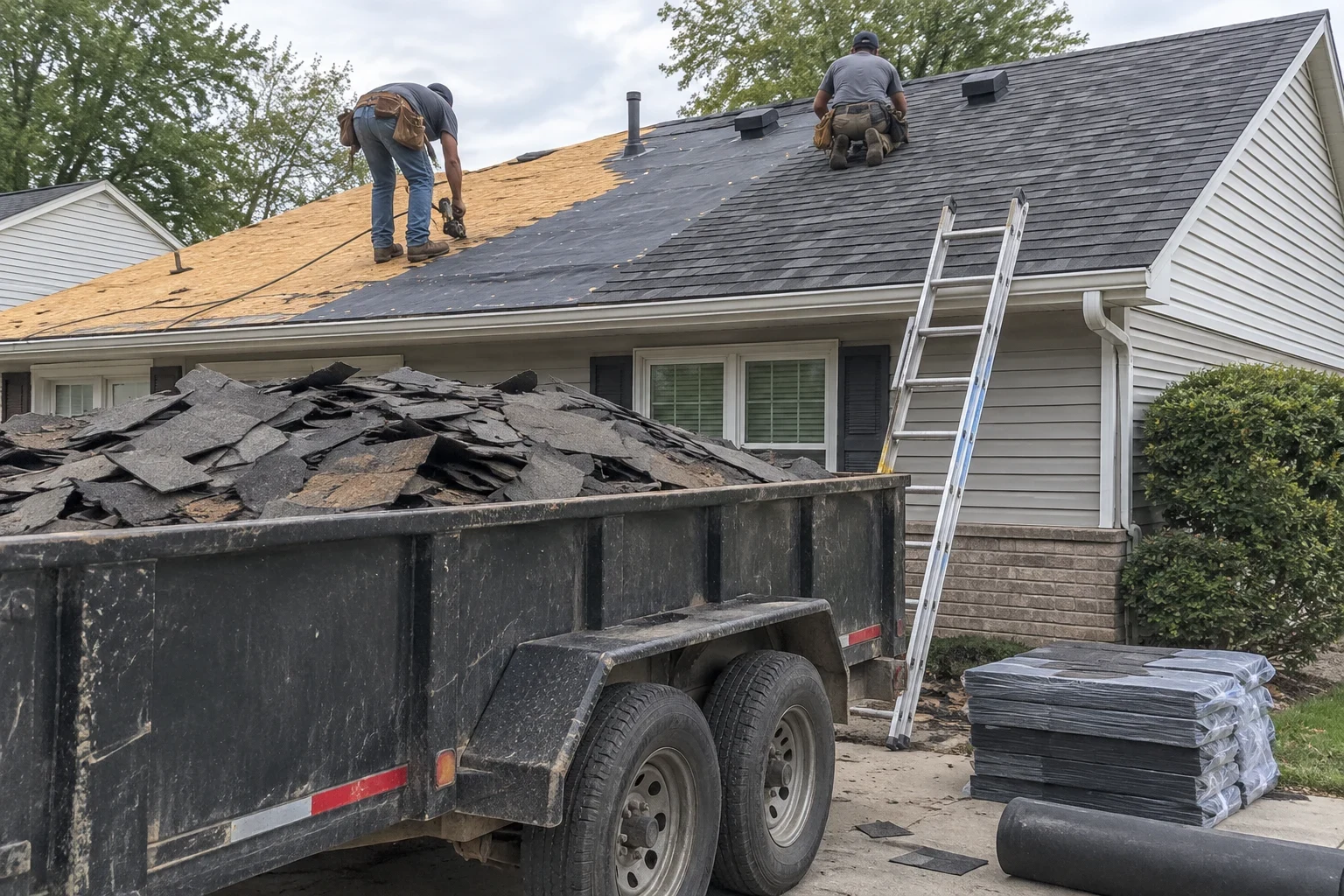
When a roof is past repair, we replace it the full way: tear-off to the deck, new decking where it is soft, ice and water barrier at the eaves and valleys, and fresh flashing and vents. You get a clear written estimate before any work starts.
When a new roof makes more sense than another repair
A roof can take a few repairs and keep going for years. At some point, though, the shingles are worn through across every slope, the leaks keep moving and each patch buys less time. That is when replacement costs less over the long run than repeated fixes.
We start by looking at the whole roof, not just the spot that leaks. We check the shingles, the flashing, the attic and the decking underneath, then tell you plainly whether a repair will hold or whether it is time to replace. If a repair is the honest answer, we will say so and point you to our roof repair service.
Around Lawrence, many homes are on their second or third roof, and older layers were sometimes installed over one another. We remove everything down to the wood so the new roof sits on a clean, solid surface and lasts as long as the material allows.
Everything that goes into the new roof
- Removal down to bare wood
- Each old layer comes off until the sheathing is visible. With the deck exposed we can judge its condition, and the new shingles sit flat rather than tracing the lumps of what was below.
- Sheathing check and replacement
- Any board that is soft, separating or rotted is cut out and replaced with new sheathing. Before we change a single sheet, we send you photos, so every addition is something you've seen.
- Ice and water membrane
- A self-adhering membrane goes along the lower edge of the roof, down each valley and around the base of every roof penetration. When winter ice builds up near the gutters, this sealed layer stops meltwater from backing up beneath the shingles.
- Underlayment and new metal
- The remaining deck gets synthetic underlayment. Step flashing, chimney flashing, drip edge and pipe boots are all new, since reused metal and aged rubber are where many leaks begin.
- Balanced attic airflow
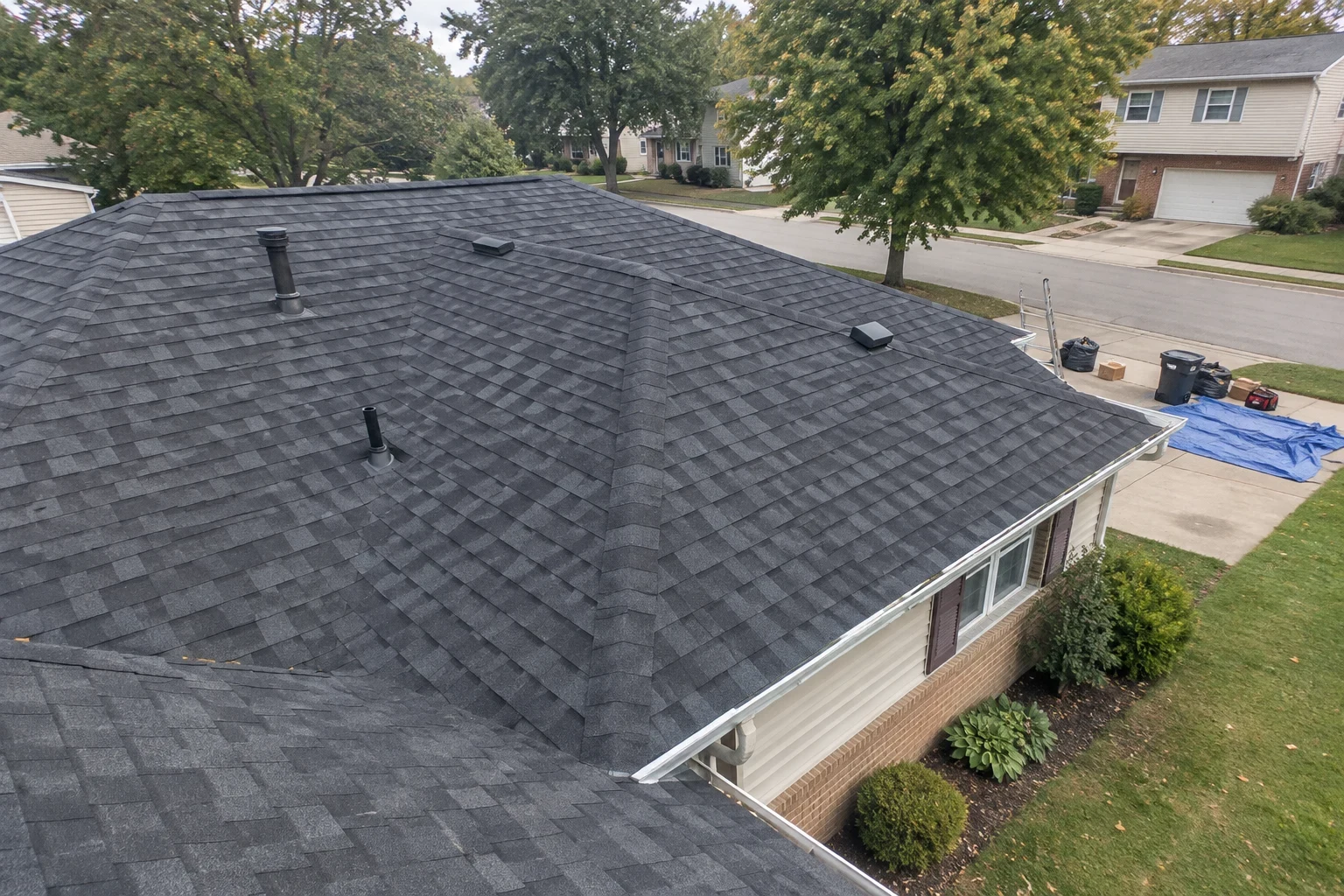
- Intake vents at the soffits are matched to exhaust at the ridge. Steady airflow keeps summer heat and winter moisture out of the attic, which protects both the shingles and the wood beneath them.
- Daily cleanup and nail sweep
- Tarps cover your plantings and the sides of your home while old material comes down. Each evening we haul off debris and roll a magnet across the yard and driveway to catch loose nails.
When repairs stop being enough
Granules collecting in gutters
Aging shingles lose their mineral coating. If the gutters hold piles of it, or you can see dark bald spots up top, the asphalt is taking direct sun and rain with nothing shielding it.
Shingles curling or cupping
Lifted edges and sunken centers tell us the shingles have lost their oils. Wind gets under them more easily, and so does water.
Leaks that spread or come back
A single leak can usually be fixed. When stains turn up in different rooms, or reappear after a repair, the whole roof is usually wearing out.
A dip in the roofline
A low spot between rafters or along the ridge may mean the sheathing has soaked up water and is losing strength. Have it looked at soon so the problem doesn't grow.
An older roof losing shingles each winter
Repeated freezing and thawing loosens seams and nail holes year after year. An asphalt roof near twenty years old that keeps shedding shingles is likely close to done.
Where the cost of a new roof comes from
We price each roof only after measuring it and looking underneath, so we don't give a phone figure for a roof we haven't seen. Once the inspection is done, your written estimate breaks the job into its parts and shows what each one costs. If you'd rather pay over time, financing is available.
Square footage and slope
The area of the roof decides how many bundles and rolls we order. A steep pitch calls for extra fall protection and slower, more careful footwork, so the labor goes up.
How many old layers
Every extra layer of old shingles adds hours of stripping and more weight in the dumpster. A house carrying two or three roofs costs more to clear than one with a single layer.
What we find in the decking
If the sheathing is solid, it adds nothing. Any rotted boards are swapped at a per-sheet rate written into the estimate ahead of time, so the final bill doesn't surprise you.
The material you pick
Architectural shingles, higher-end designer shingles and metal panels differ in both material cost and install time. We're glad to price two options next to each other so you can weigh them.
From first visit to final walkthrough
- 1
Inspection and itemized estimate
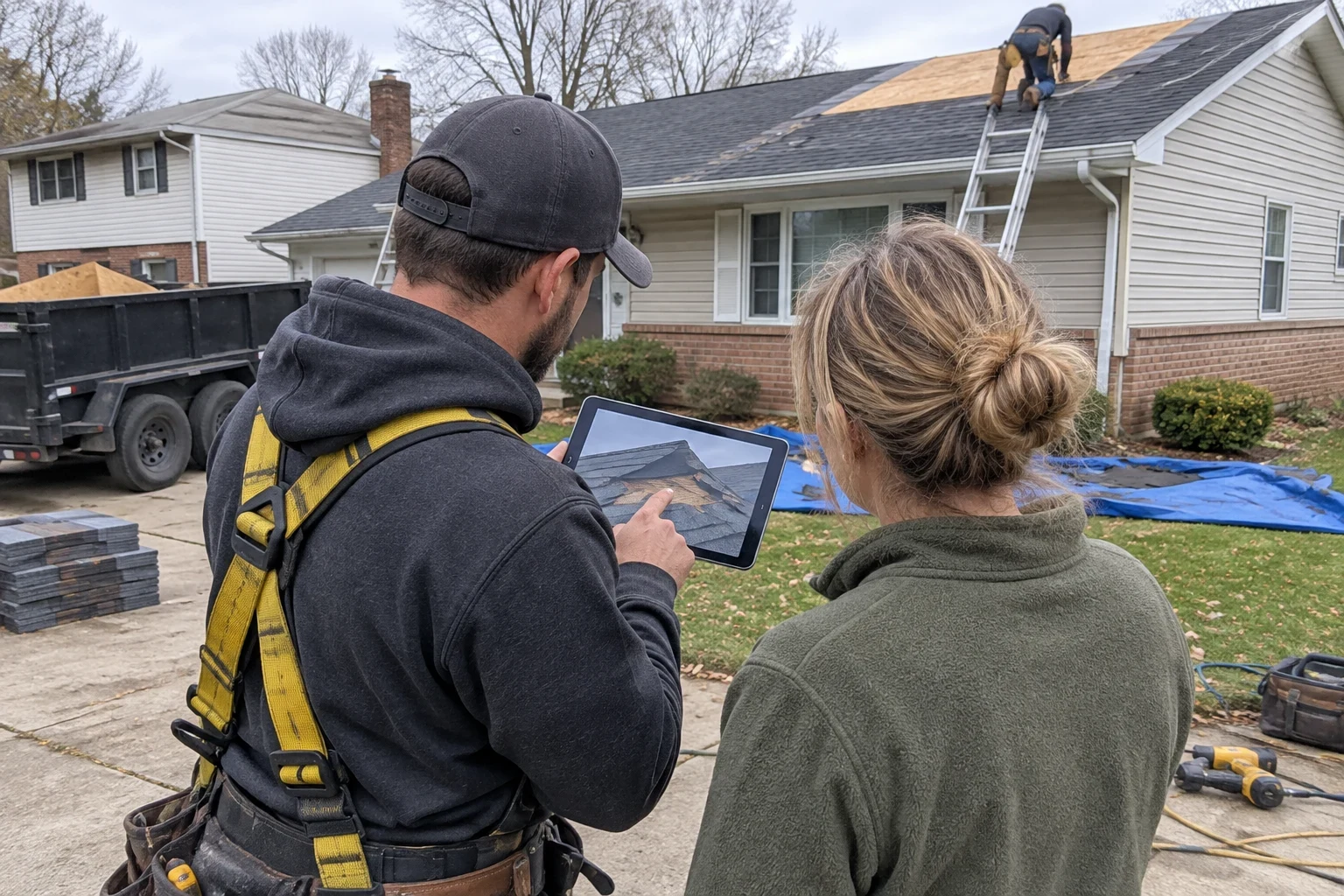
Our visit covers every slope, the flashing and the attic, with photos along the way. Your estimate is broken out line by line, including materials, a decking allowance and the permit, so it's easy to compare with others.
- 2
Picking materials and a date
We talk through shingle styles and colors, plus metal if it's on your mind. Then we book a day with good weather ahead and time the material delivery for just before the crew arrives.
- 3
Permit and site prep
Where the work needs a permit, we pull it. On the first morning we cover plants and walls, and park the dumpster as near the roof as your driveway allows.
- 4
Tear-off and installation
The crew works section by section, stripping and closing each one before moving on, so your home isn't left open. Most roofs take one or two days, depending on size and weather.
- 5
Walkthrough together
We go over the finished roof with you, hand over photos of the layers now hidden under the shingles and handle any inspection the permit requires.
Common roof replacement questions
Can the new shingles go right over the old ones?
We advise against it. Layering covers up the wood we need to check, puts extra weight on the framing and tends to trap heat that wears the new shingles faster. Taking everything off lets us repair what's underneath and gives a flatter, cleaner finish.
Do I have to stay home while you work?
You don't. We like to talk with you when the crew arrives and again at the walkthrough, but you can go about your day. Moving cars out of the driveway helps, and so does taking framed pictures or fragile pieces off the walls, since tear-off sends some vibration through the house.
What if rain shows up mid-job?
We pick dates with a dry forecast and only open as much roof as we can close up the same day. If the weather turns anyway, any exposed area gets covered with underlayment and secured tarps until we can come back and finish.
Could my insurance cover a new roof?
If hail or high wind did the damage, your policy may pay for part of the new roof or the whole thing. On storm claims we stand alongside you and your insurance company, documenting the damage with photos and meeting the adjuster on site. Whether the claim is approved is up to your insurer, not us. Our storm damage repair page explains the steps in more detail.
How many years should a new roof last?
That comes down to the material, the attic airflow and the quality of the install. Architectural shingles on a sound deck with balanced ventilation typically last for decades, and metal roofing can go well beyond that.
Get a clear read on your roof before you decide
We'll look over the shingles, the flashing and the attic, then tell you plainly whether a repair will hold or a new roof is the better choice. Homeowners in Lawrence and nearby towns like Fishers and McCordsville can set it up with one phone call.