ServicesGutters
Gutters in Lawrence, IN
We install continuous aluminum gutters and downspouts measured to your roof, fastened with hidden hangers and pitched so water leaves your home where it should. Each gutter job begins at the roof edge, because that is where most gutter trouble actually starts.
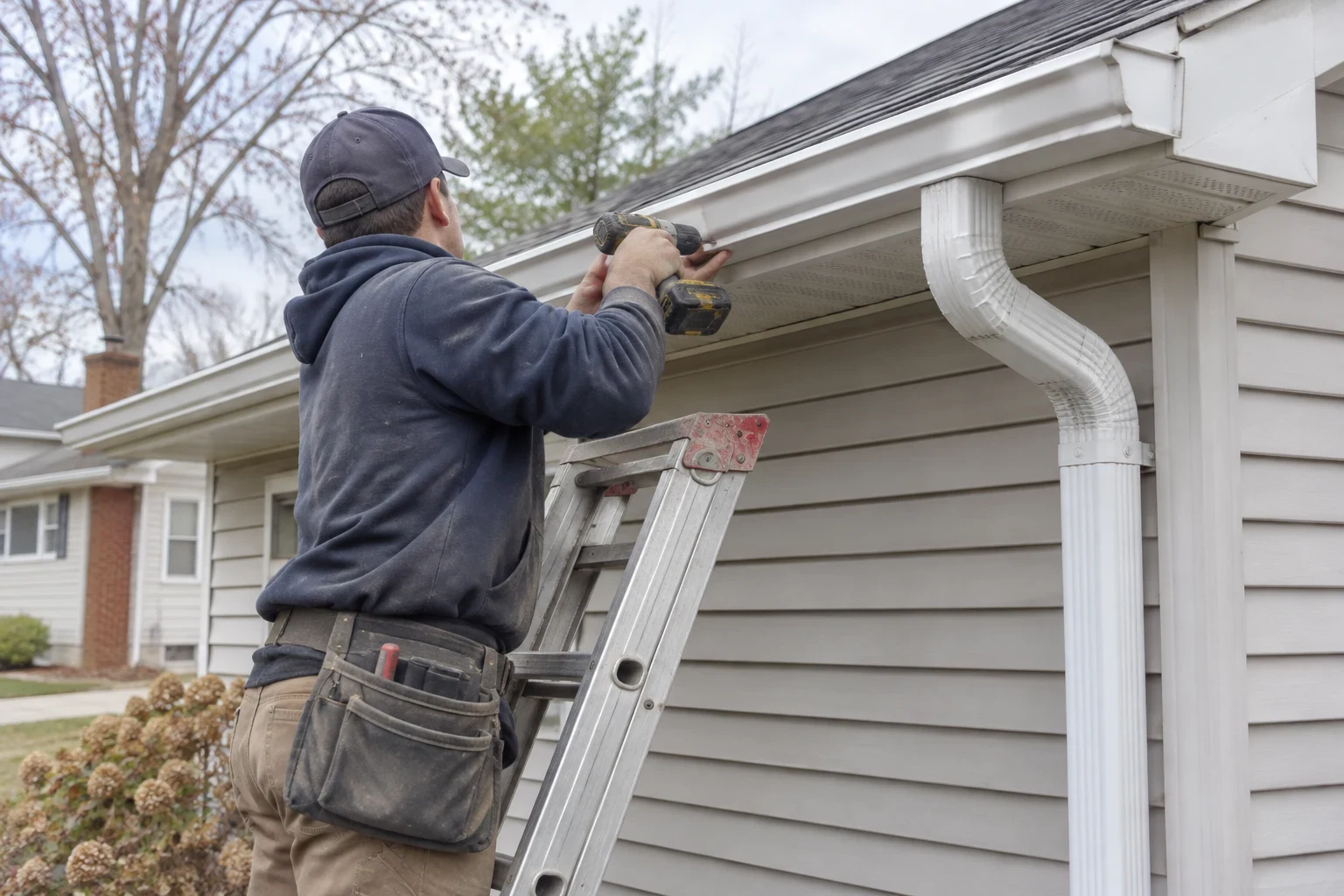
Gutters that work with the roof above them
A gutter has one job: collect what runs off the roof and set it down far enough from the house that it never finds the basement or crawlspace. When it fails, the damage rarely shows up at the gutter itself. It shows up as rotted fascia, peeling trim, a wet basement corner or a soft patch of mulch that never dries.
We treat gutters as part of the roof system. Before we size anything, we check the drip edge, the fascia board and the last course of shingles, since a new gutter fastened to soft wood or set behind a missing drip edge will not last. In central Indiana, where a single spring storm can drop an inch of rain in an hour and winter brings repeated freeze and thaw, getting the size and pitch right matters more than the brand on the box.
If the roof itself needs attention, we will tell you plainly and point you to roof repair or roof replacement. If it only needs gutters, that is all we will quote.
What a gutter job with us includes
Continuous aluminum, formed on site
We roll each run to length right at your home, so joints only appear at the corners. Fewer joints leave fewer spots for leaks to start or ice to pry open.
Sizing matched to roof area
Many older homes carry 5-inch K-style gutters with 2x3 downspouts. Steep or large roof planes often need 6-inch gutters and 3x4 downspouts to keep up with heavy downpours, and we measure before we recommend either.
Hidden hangers and correct pitch
Hangers go in roughly every two feet and screw into solid fascia. We set a slight, steady fall toward each outlet so water moves instead of pooling and freezing.
Downspouts placed where water can leave
We position outlets and extensions to discharge away from walkways, window wells and the foundation, and we talk through the layout with you before cutting anything.
Fascia and drip edge check
Soft or rotted fascia is replaced before new gutters go up, and we confirm a drip edge is in place so roof runoff lands inside the trough.
Removal and cleanup
Old gutters, spikes and fasteners are hauled away. We sweep the beds and drive and run a magnet over the lawn for stray screws.
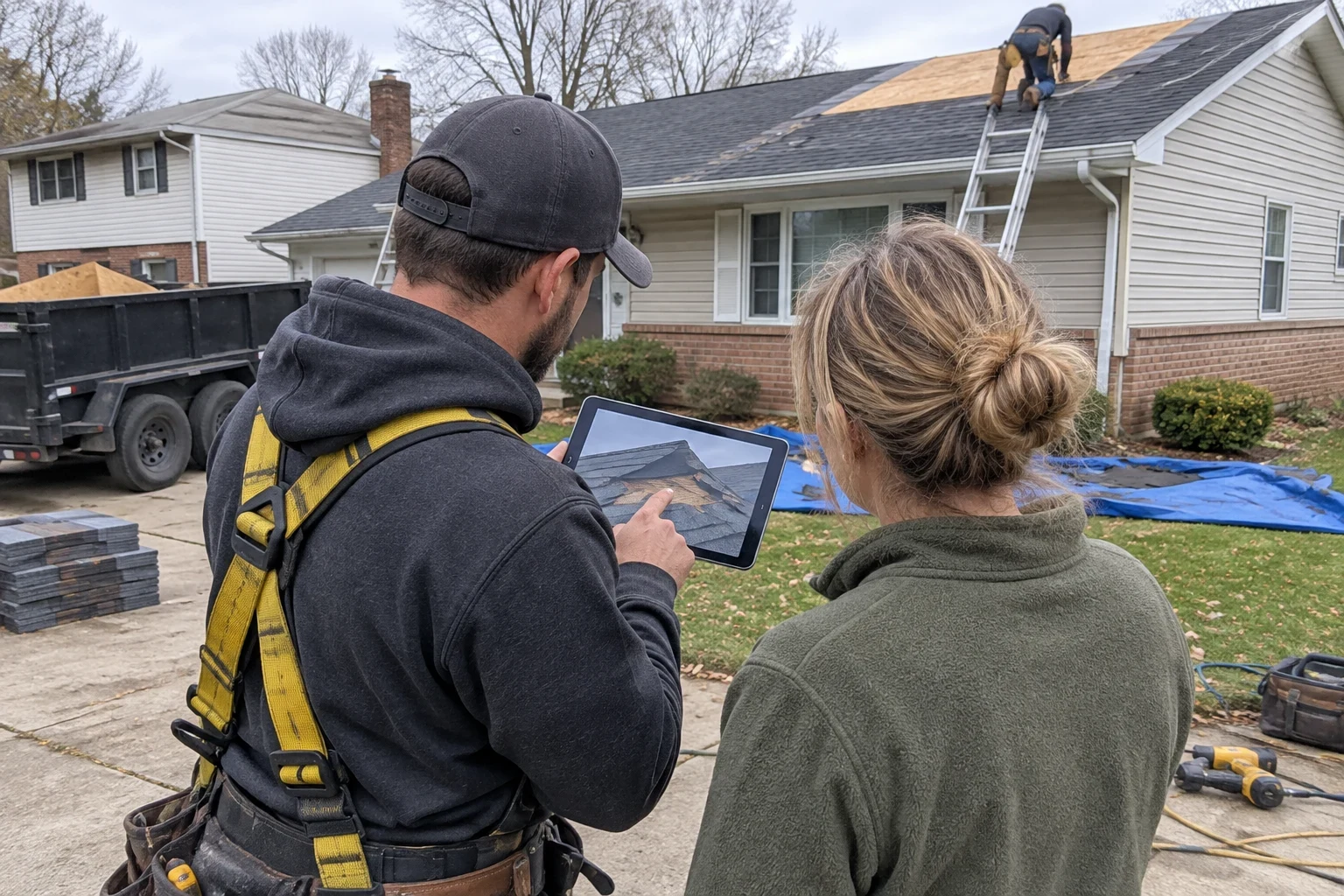
Signs your gutters are falling behind
- Overflow in an ordinary rain
- When a steady, unremarkable shower pours over the outer lip, the trough is too small, blocked or tilted away from its outlet.
- Runs pulling away from the house
- Older spike-and-ferrule hangers loosen as fascia wood dries and shrinks. A drooping section collects water, gets heavier and turns into a block of ice in January.
- Dark streaks or soft wood at the roofline
- Staining on the fascia or paint flaking just under the eave tells us water is running behind the gutter rather than into it.
- Thick ice along the eaves
- Large icicles and ice packed into the trough can come from poor drainage, attic heat loss or both. We check for each before recommending anything.
- Wet basement corners after a storm
- Pooling at the foundation, mulch washed out of the beds or a trench under a downspout usually means the water is being released too close to your home.
How a gutter installation runs
- 1
Inspection and measurements
We start with a free roof inspection, measure each roof plane and check the fascia and drip edge. You get a written estimate that lists gutter size, downspout count and any wood repair separately.
- 2
Prep and removal
On install day we protect plantings near the eaves, take down the old system and replace any fascia that will not hold a screw.
- 3
Forming and hanging
Gutters are formed on site, set to pitch, sealed at the corners and end caps, and fastened with hidden hangers into solid wood.
- 4
Water test and walkthrough
We run water through each run to confirm it drains, then walk the house with you, show you the outlets and clean up before we leave. Most homes are finished in a day.
What shapes the price of new gutters
Two things set most of the price: how much gutter your home needs and how much work it takes to hang it properly. We measure on site and itemize the estimate, so each part of the job has its own line. If spreading the cost over time suits you better, financing is available.
- Total run length and corner count
- Every extra foot of eave adds material, and each inside or outside corner adds a joint we have to seal by hand.
- Trough and downspout dimensions
- Stepping up to 6-inch gutters or 3x4 downspouts costs more in aluminum. On a large roof plane, it is often what keeps the system from overflowing in a hard storm.
- The wood behind the gutter
- Fascia that has gone soft must be replaced before a hanger can hold. We record it during the inspection so it appears on your estimate in writing, not as news on install day.
- Height and working room
- Second-story eaves, steep pitches and narrow side yards call for more ladder setup, staging and time.
- Optional guards and extensions
- Gutter guards and longer surface or buried extensions are extras. Each is priced on its own line so you can decide.
Gutter questions we hear often
- If I'm getting a new roof, do the gutters need to come off too?
- Frequently, yes. Roof replacement usually includes new drip edge, and the crew often has to take older gutters down to install it correctly. When your existing gutters are in good shape and the right size, we can put them back up, and we will tell you that honestly.
- Is it worth going up to 6-inch gutters?
- On big or steep roof sections, it usually is. A 6-inch trough holds and moves much more water, so it is slower to overflow in a downpour and less likely to choke on leaves. Smaller, gentler sections often do fine with 5-inch.
- Will gutter guards mean I never clean my gutters again?
- Not entirely. Guards block leaves and most seed pods, but shingle granules and fine debris still settle in over the years. You will clean less often, and we will give you a straight answer on whether guards make sense for the trees near your home.
- My gutter leaks at one corner. Do I need a whole new system?
- Often not. When the gutter is properly sized and still holds its pitch, resealing the joint or rehanging a sagging run is the sensible fix. We suggest replacement only when a repair would not last.
- Can new gutters stop ice dams?
- Gutters that drain well keep standing water from freezing in the trough. A true ice dam, though, starts with attic heat melting snow farther up the roof, which then refreezes at the cold edge. During the inspection we check ventilation and the roof edge so you know which issue you actually have.
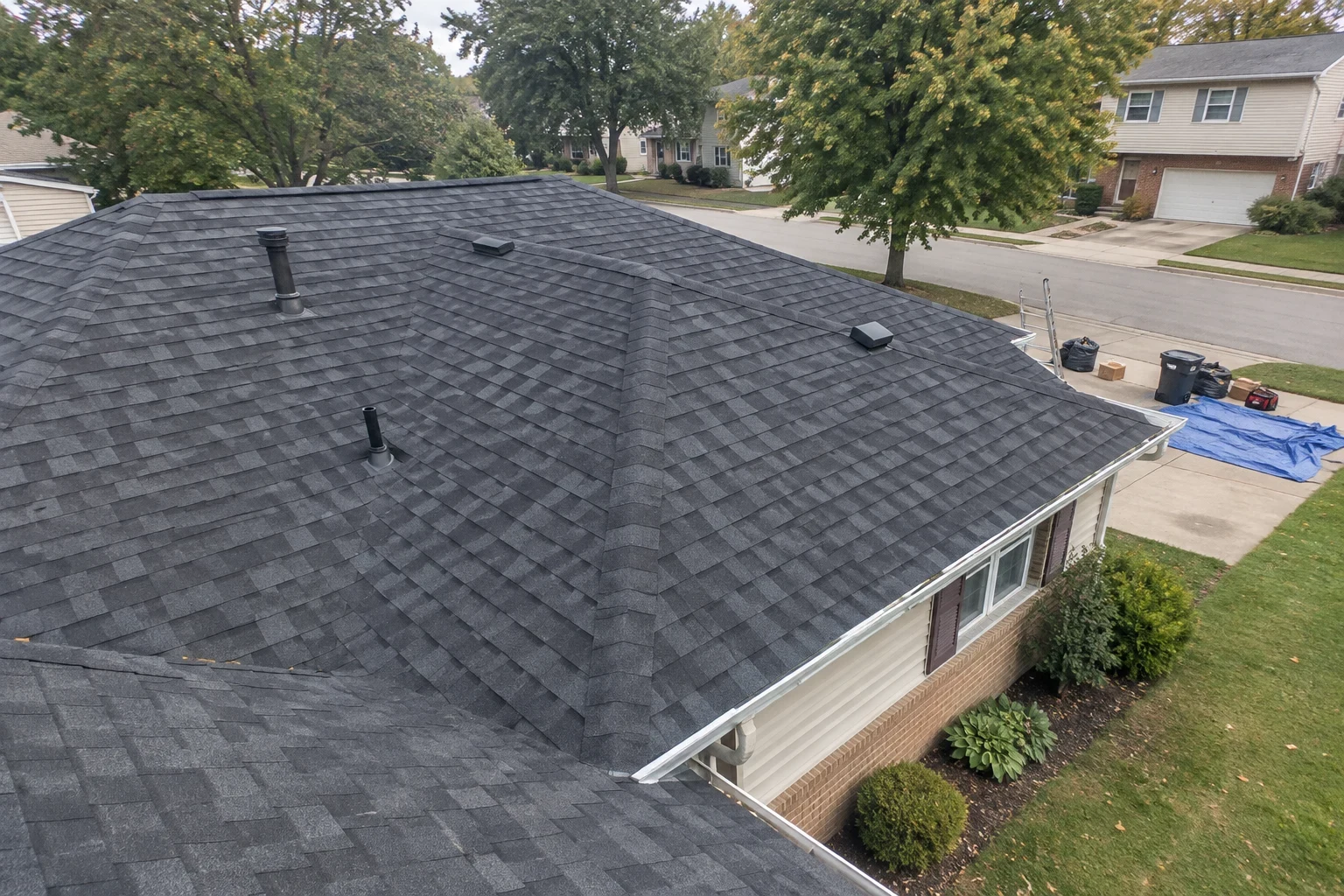
Let us look at your roof edge first
We will check your gutters, fascia and drip edge, then explain what is working and what is not. You will have a written estimate before any work is scheduled.